Youth for Christ appeals to Zoning Board, reopens ministry. Leland citizens call on officials to play long game

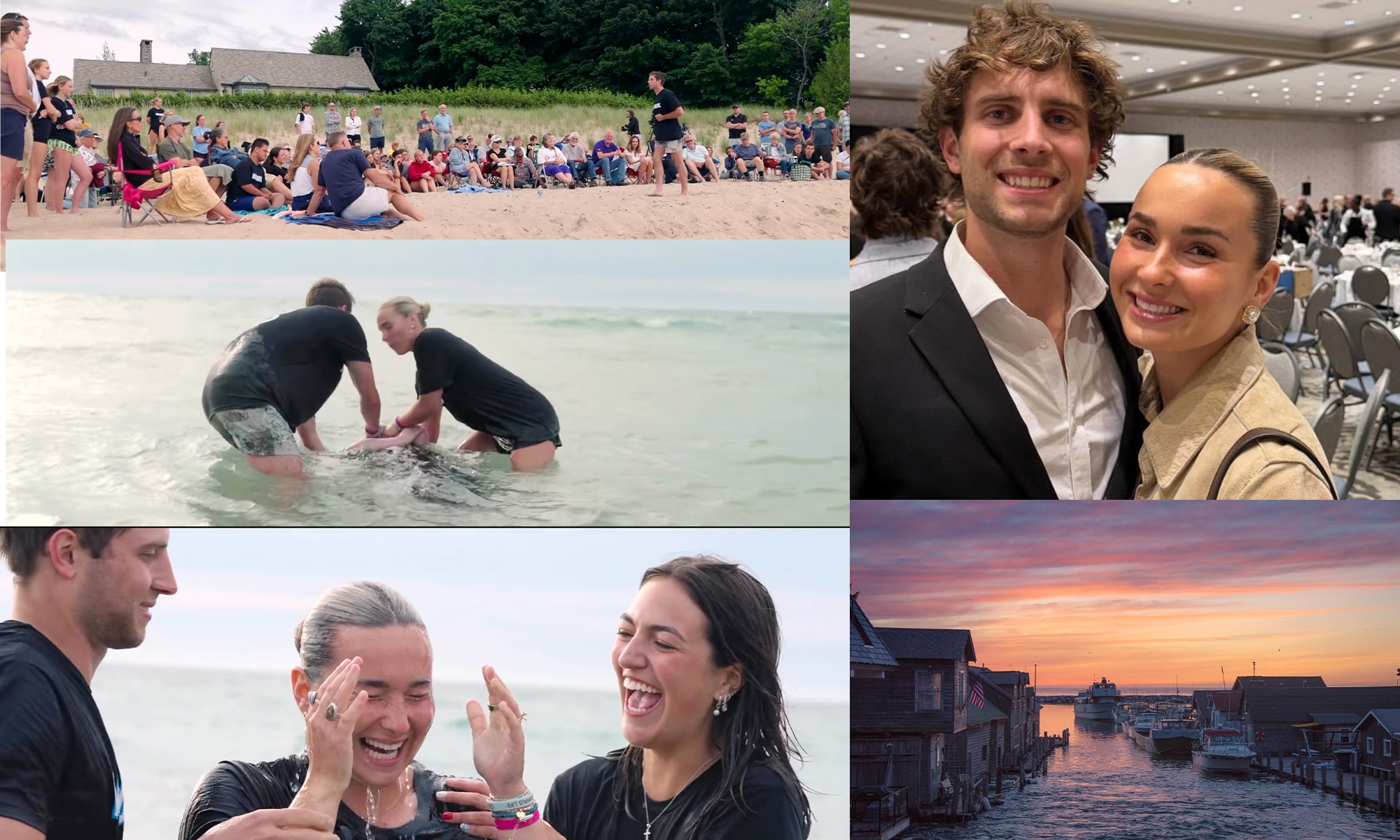
Left photos: screenshots from Leelanau Lighthouse Instagram; top right: Micah and Kya Cramer; bottom right: Leland Fishtown
By Jacob Wheeler
Sun editor
As expected, Apollos Properties and “Bear Man” Jim Van Steenhouse last month appealed their special use permit application to Leland Township’s Zoning Board of Appeals (ZBA). This comes after the Planning Commission rejected Apollos’ application by a vote of 4-1 at their April 15 meeting, following months of deliberation, public comment, and outside legal opinions.
Apollos seeks to hold Youth for Christ’s controversial Lighthouse ministry in a building they own that overlooks Fishtown in the heart of Leland’s business district.
VanSteenhouse’s attorney Robert Parker informed lawyer Thomas Grier, with the Running Wise Law Firm, on April 28 that “while the matter is on appeal before the [ZBA], Youth for Christ intends to resume its activities at the property commencing Tuesday, May 5.” [Click here to read Parker’s letter.]
Grier had advised the Planning Commission with “findings of fact” before it rejected Apollos’ application. The property in question is 110 North Lake Street, which sits in a zoned commercial district.
Leelanau Lighthouse is a chapter of the multinational Youth for Christ organization. Local missionaries Micah and Kya Cramer began using the space for a ministry in February 2025. They drew scrutiny for allegedly recruiting students at Leland public school to their ministry during the past two school years. Micah, who is VanSteenhouse’s nephew, was barred last fall from volunteering inside the school.
At the April 15 Planning Commission meeting, which was held in Northport’s school auditorium to accommodate a large crowd, Leland citizens called on township officials to overcome fears of future litigation from VanSteenhouse and Youth for Christ.
“If you feel you are currently considering approval to avoid a legal battle, then I urge you to move forward with another option: a legislative moratorium,” said Leland resident Lauren Connor.
Connor and other citizens who spoke during the public comment period referenced several recent examples of villages and townships elsewhere in Leelanau County enacting moratoriums to stop developments from outside players that locals opposed.
Facing interest from a “dollar store” development, in 2019 Empire Village enacted a moratorium to define specific standards for “small-box retail” before making a final decision, creating what moratorium advocates described as a neutral, defensible standard that protected the village’s character.
In 2021, Leelanau Township adopted a 180-day moratorium on new RV park applications to allow for a comprehensive review of their Commercial Resort District regulations.
And in 2025, faced with the prospect of a Dollar General development near Maple City, Cleveland Township passed a zoning and building moratorium to update their ordinance to reflect the community’s voice and the Master Plan’s intent.
Reporting in the Glen Arbor Sun and elsewhere has shown that when dollar stores enter a community, they squeeze locally-owned grocery stores and retail, sometimes putting them out of business. Leelanau County remains the only county in Michigan without a discount chain store.
Local townships have sometimes been forced to play the long and expensive game to resist outside developments.
Last month, a federal court sided with Centerville Township in its legal battle stemming from a Planning Commission denial of a special use permit for Northgate-Leelanau Pines, LLC. That campground sought in 2022 to double the number of campsites from 170 to 342, build a waterfront pavilion on Lake Leelanau, and add swimming pools, a splash pad and mini golf.
Township planners denied the permit, finding that expansion plans were inconsistent with Centerville’s Master Plan, and that it didn’t fit with the township’s “scenic aesthetic.” Centerville Township has spent more than $100,000 in defending the case.
“Large corporations generally target these areas [like Leelanau County] that have flown under the radar,” Lindy Kellogg, chairperson of the Centerville Township Planning Commission, told the Sun. “If you dig a little into Northgate, you’ll see they have a track record of targeting small places. They have a history of not following zoning because they have money. They can push litigation to get their way.
Kellogg emphasized the importance of robust zoning ordinances, even as updating them requires that townships and planning commissions allocate financial resources, time and energy. She referenced Leland, where community members, some of them lawyers, stepped forward to push the Planning Commission to apply zoning codes when considering Youth for Christ’s bid for a downtown ministry.
“Zoning isn’t arbitrary. It’s created by the community members,” said Kellogg.