At the end of July, a 24-year-old woman solo bike packed from Mackinaw City to Grand Rapids, tracing the Lake Michigan shoreline in what she remembers as “an amazing 11 days.” Not only was it Yasmina Ahlmaris’s first time outside her home country of Morocco, it was also her first time camping. “My last name means people from Mars,” she laughed. “That’s probably why I’m so crazy.” On her journey, Ahlmaris pedaled through Petoskey, Traverse City, the Sleeping Bear Dunes, Manistee and other towns, developing the itinerary with a little help from her friends.
Celebrating a national anniversary is kind of similar to looking ahead at a milestone birthday, with good, bad, and sometimes ugly aspects. Linda Engelhard writes that she is still breathing but not everything in her past is cause for a party. She and her husband John escaped snowmageddon last winter and were heading toward the coast of Georgia, surrounded by Civil War history on the way. Without snow to shovel, they began to contemplate what a genuine celebration of the Declaration of Independence might look like for us. “We love this country. That said, we also love justice, honesty, kindness, generosity—the values we grew up with that seem to be less embraced by our country in 2026. We settled on a quest to celebrate by learning more history and visiting 250 historic sites by the end of the year.”
Share this:
- Share on Facebook (Opens in new window) Facebook
- Share on X (Opens in new window) X
- Email a link to a friend (Opens in new window) Email
- Share on Reddit (Opens in new window) Reddit
- Share on Pinterest (Opens in new window) Pinterest
- Share on LinkedIn (Opens in new window) LinkedIn
- Print (Opens in new window) Print
- Share on Tumblr (Opens in new window) Tumblr
On the nation’s 250th birthday, a member of our Leelanau community—albeit one who remains anonymous to protect her immigration status—shares her story of arriving in this land of immigrants. “Welcome to America,” an immigration officer told us at the Fort Lauderdale-Miami Airport. With those words, he stamped our papers, confirming that everything was in order with our process and that, finally, we could enter the country. He had no way of knowing the profound commotion his words had caused within me. That “Welcome to America” lingered, echoing in my ears as we walked down a narrow hallway toward the exit of the crowded airport. With one hand I pulled a small suitcase, and with the other, I held my daughter, who looked just as disoriented as I felt. A few steps ahead walked my husband, quickening his pace alongside our youngest son. I felt a whirlwind of emotions: peace, disbelief, confusion, fear, joy, solace, gratitude, and nostalgia.
Share this:
- Share on Facebook (Opens in new window) Facebook
- Share on X (Opens in new window) X
- Email a link to a friend (Opens in new window) Email
- Share on Reddit (Opens in new window) Reddit
- Share on Pinterest (Opens in new window) Pinterest
- Share on LinkedIn (Opens in new window) LinkedIn
- Print (Opens in new window) Print
- Share on Tumblr (Opens in new window) Tumblr
Tim Mulherin writes about having turned 70 in early March. “Those of you who have already reached that lofty milestone know exactly what I mean when I say that it’s a weird place to be,” he writes. “For me, the mind is still stuck in the 70s—meaning the decade—while the body is wholly in 2026. Of course, those of you who are much younger have no idea what that’s like. But you will; just give it some time.”
Share this:
- Share on Facebook (Opens in new window) Facebook
- Share on X (Opens in new window) X
- Email a link to a friend (Opens in new window) Email
- Share on Reddit (Opens in new window) Reddit
- Share on Pinterest (Opens in new window) Pinterest
- Share on LinkedIn (Opens in new window) LinkedIn
- Print (Opens in new window) Print
- Share on Tumblr (Opens in new window) Tumblr
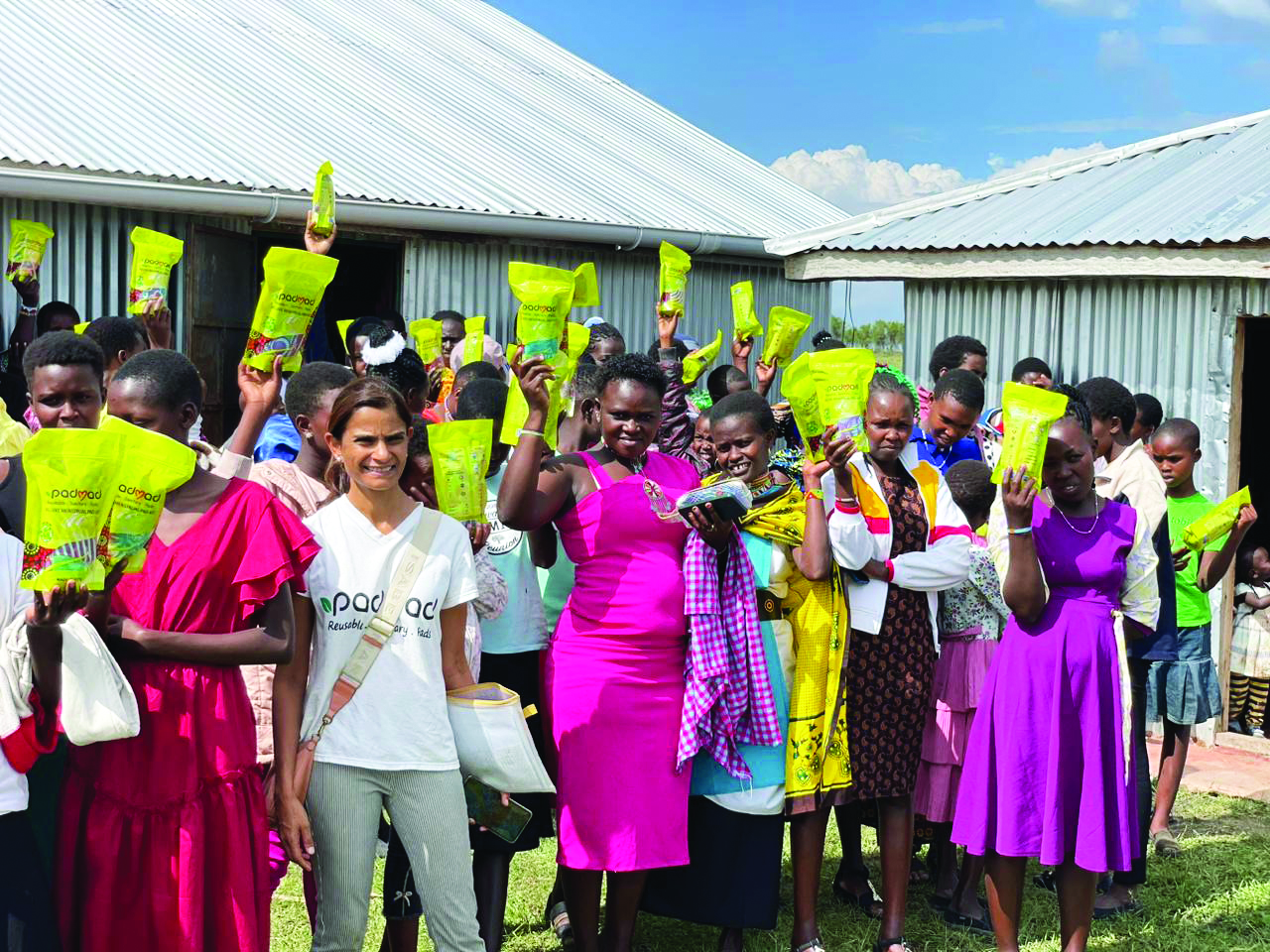
Global changemaker Madhvi Dalal travels from her native Kenya to Northern Michigan this October for a series of events at which she’ll share solutions to some of the most surprising and challenging issues facing women and girls across the world. The visit expands a partnership between Dalal and the Uplift Travel Foundation—a Leelanau-based nonprofit where participants travel with a purpose, walking alongside local visionaries to help them solve their community’s most pressing issues while finding authentic connections and friendships that transcend borders. Uplift has worked with Dalal to provide reusable menstrual pads and empowerment training to women in villages across Kenya’s Maasai Mara. The project now also includes Northwestern Michigan College staff and students in a variety of exciting ways.
Share this:
- Share on Facebook (Opens in new window) Facebook
- Share on X (Opens in new window) X
- Email a link to a friend (Opens in new window) Email
- Share on Reddit (Opens in new window) Reddit
- Share on Pinterest (Opens in new window) Pinterest
- Share on LinkedIn (Opens in new window) LinkedIn
- Print (Opens in new window) Print
- Share on Tumblr (Opens in new window) Tumblr
In Tremé, life always seemed to teeter on the edge. Heat and humidity pressed down until it broke loose in sudden bursts: a fight, a chase, gunshots, sirens. Violence could turn savage without warning. And yet, on Sunday afternoons, a brass band would come down Villere Street, horns lifting the air, and for a while the same pressure fed joy instead of rage. That tension seeped into me, writes Andrea Claire Morningstar. When Hurricane Katrina arrived on Aug. 29, 2005, the levees broke, and the city slipped into nightmare on my television screen in Michigan, all I could think of were the dogs—the pack roaming my block, the puppy abandoned in the park, the neighbor’s chained rottweiler. I cried for the dogs. Where was my downstairs neighbor with her bandaged fist? Had the water reached the second floor with its shattered glass windows? The old man singing along to The Wizard of Oz? The second line band that graced Villere Street on Sunday afternoons?
Share this:
- Share on Facebook (Opens in new window) Facebook
- Share on X (Opens in new window) X
- Email a link to a friend (Opens in new window) Email
- Share on Reddit (Opens in new window) Reddit
- Share on Pinterest (Opens in new window) Pinterest
- Share on LinkedIn (Opens in new window) LinkedIn
- Print (Opens in new window) Print
- Share on Tumblr (Opens in new window) Tumblr
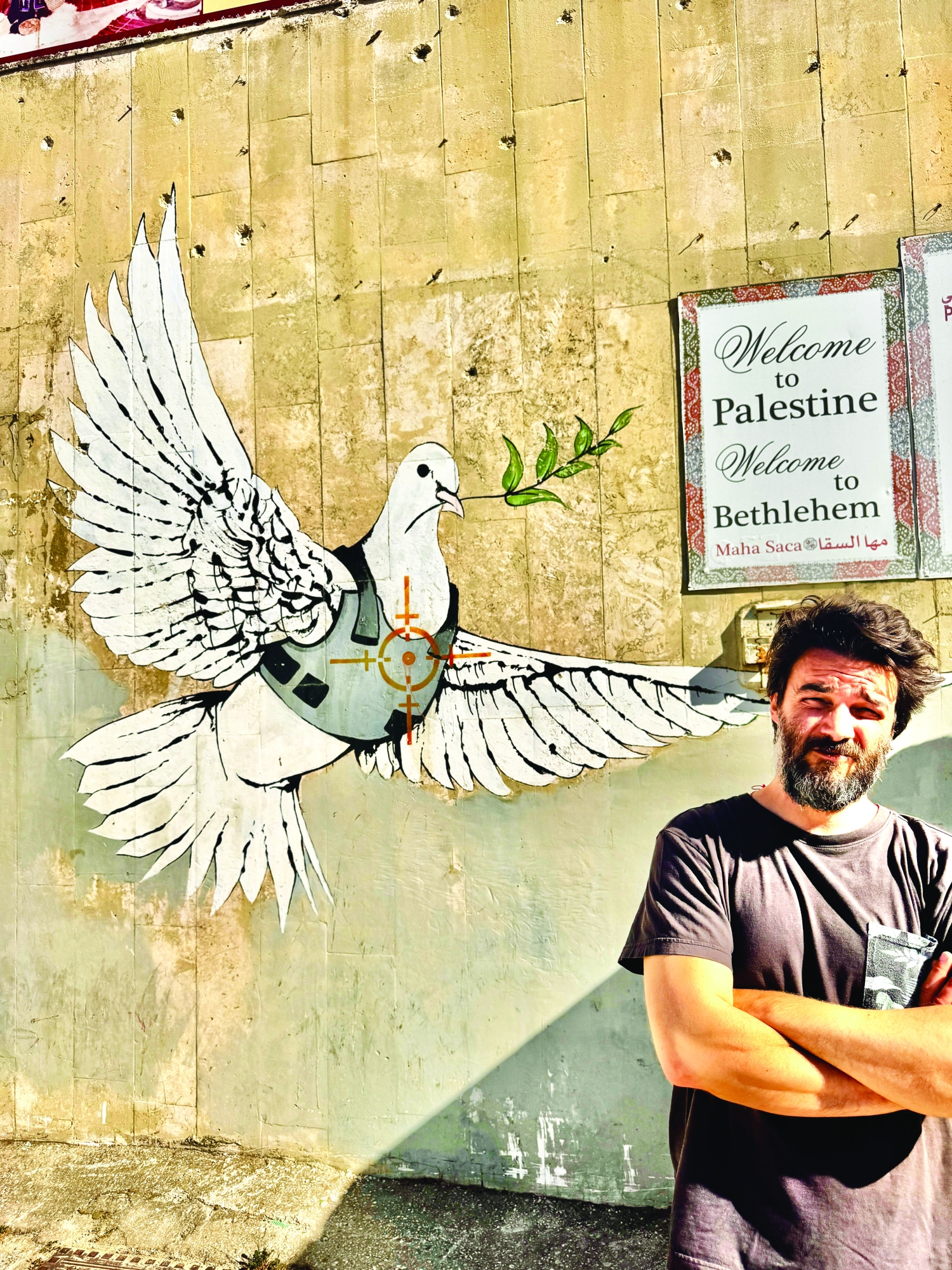
“Genocide” is most commonly invoked in the past tense, used to describe an historical event. While genocides are underway they are often overshadowed by the larger context of war and can go unrecognized in the day to day, a civilian bombing here, a displacement there. Then there are refugee migrations, and forced famine. Most often it is from the safety of hindsight that a genocide be universally accepted as such and join the history books along side those of Armenia, Rwanda, Darfur, Cambodia, Germany and Srebrenica, to name just a few from recent history. Because in the past, due to the limits of gathering and disseminating information, many indicators of genocide of the past went unnoticed, the momentum of the killing would outpace the ability of society to identify a genocide and respond. Yet today we are watching in real time as it’s horrors unfold in Gaza. This is new terrain.
Share this:
- Share on Facebook (Opens in new window) Facebook
- Share on X (Opens in new window) X
- Email a link to a friend (Opens in new window) Email
- Share on Reddit (Opens in new window) Reddit
- Share on Pinterest (Opens in new window) Pinterest
- Share on LinkedIn (Opens in new window) LinkedIn
- Print (Opens in new window) Print
- Share on Tumblr (Opens in new window) Tumblr
As young international development workers in Africa in the 1980s-1990s, we wondered why people often displayed a photo of President John F. Kennedy in their homes. Here’s why. In 1961, President Kennedy proposed the establishment of USAID (the United States Agency for International Development) the same year he called for the creation of the Peace Corps. USAID is not partisan, write Phyllis & Dan Craun-Selka, residents of Lake Ann, Michigan, who worked with USAID for some 35 years in 30 countries. Our foreign policy depends on the 3 Ds- Defense, Diplomacy, and Development working together to keep America safe. Department of Defense leaders will tell you that USAID prevents wars. President Reagan increased the USAID budget linked to a national policy to promote democracy and business around the world. President George W. Bush’s PEPFAR (President’s Emergency Program for AIDS Relief), authorized by Congress, became the most successful aid program ever, so far, saving more than 26 million people. PEPFAR has made America safer and more secure with the AIDS pandemic under better control.
Share this:
- Share on Facebook (Opens in new window) Facebook
- Share on X (Opens in new window) X
- Email a link to a friend (Opens in new window) Email
- Share on Reddit (Opens in new window) Reddit
- Share on Pinterest (Opens in new window) Pinterest
- Share on LinkedIn (Opens in new window) LinkedIn
- Print (Opens in new window) Print
- Share on Tumblr (Opens in new window) Tumblr
Twenty years ago, when Paul Sutherland joined the board of Safe Passage, which launched a school for the children of the Guatemala City garbage dump, he also helped kickstart what has become a dynamic and ongoing relationship between Leelanau County citizens and Guatemala. In the decades since then, local schools have sent students, and teams of volunteers have joined cultural exchange trips to the beautiful, yet economically unequal, Central American nation. Since the COVID-19 pandemic abated, Guatemalan nonprofit Planting Seeds has hosted “service learning” groups from Northwestern Michigan College as well as Leelanau Investing for Teens (LIFT) and Leland High School. Planting Seeds co-director and Illinois native Mac Philips will visit Leelanau County this weekend to raise awareness about the nonprofit and build support in northern Michigan. He’ll visit Grocer’s Daughter Chocolate on Saturday, Suttons Bay Congregational Church on Sunday, and students in Suttons Bay and Leland.
Share this:
- Share on Facebook (Opens in new window) Facebook
- Share on X (Opens in new window) X
- Email a link to a friend (Opens in new window) Email
- Share on Reddit (Opens in new window) Reddit
- Share on Pinterest (Opens in new window) Pinterest
- Share on LinkedIn (Opens in new window) LinkedIn
- Print (Opens in new window) Print
- Share on Tumblr (Opens in new window) Tumblr
In October, the local organization Mideast: JustPeace held a community gathering to talk frankly about the dilemma those of us who care about Palestine and the Middle East face: cast a protest vote, or vote for Vice President Kamala Harris, knowing that things are likely to be worse under Donald Trump. Or at least equally bad. So in this presidential election year, what are we to do? Our choices are poor as far as American policy toward Israel is concerned.
Share this:
- Share on Facebook (Opens in new window) Facebook
- Share on X (Opens in new window) X
- Email a link to a friend (Opens in new window) Email
- Share on Reddit (Opens in new window) Reddit
- Share on Pinterest (Opens in new window) Pinterest
- Share on LinkedIn (Opens in new window) LinkedIn
- Print (Opens in new window) Print
- Share on Tumblr (Opens in new window) Tumblr