Vintage Views series offers connection to local history

By Rebecca G Carlson
Sun contributor
 From the first Gazetteer of the State of Michigan, 1838, author John T. Blois explains his goal of “disabusing the public mind…of the gross misconceptions” about the state of Michigan, “[A] State, as fair and rich by nature, as her population are high-minded, enterprising, and intelligent” (viii). After sitting down for a second interview (because one was not enough) with M. Christine Byron and her husband Thomas R. Wilson, creators and authors of the Vintage Views series of books, they picked up Blois’ baton continuing his endeavors in sharing the stories, histories, and culture that make Michigan the “Peninsulam Amoenam.” As we settled in over coffee and donuts in a charming 1950s cabin, our circuitous conversation highlighted the reasons why each Byron and Wilson work offers a fascinating journey through Michigan’s tourism history and more.
The rich, collaborative partnership of Chris and Tom is the catalyst in creating the success of their Vintage Views series. This collection of books moves beyond the typical coffee table offering. As Chris pointed out during the interview, the goal for each book is “to feel like time travel.” Cultural and historical treasures are located within each Vintage Views book. According to a review on Leelanau.com, these books are “[A] marvelous mix of vintage fun and facts of a time you’ll cherish.” Another review from the Michigan Historical Review (MHR) claims each work, “successfully blend[s] words and images to reveal…interesting [and] illustrated tale[s]” (Federspiel). Furthermore, each book “is filled with carefully chosen images and examples of ephemera and text that both explain and illustrate th[e] delightful bit[s]…[of Michigan] history.”
 Defined simply, ephemera is “something of no lasting importance” (Webster’s Dictionary). Ephemera can be everyday items, not meant to be saved, such as meal receipts, travel tickets and brochures, letters and postcards, and pictures. And yet, how many of us hold onto these ‘ephemeral objects’ as a connection to a cherished memory? I have old postcards from my grandparents sent from their trips, old birthday cards, and my personal favorite, hand-written recipe cards – all keepsakes to me that seemingly serve no purpose but as a lovely reminder of my family.
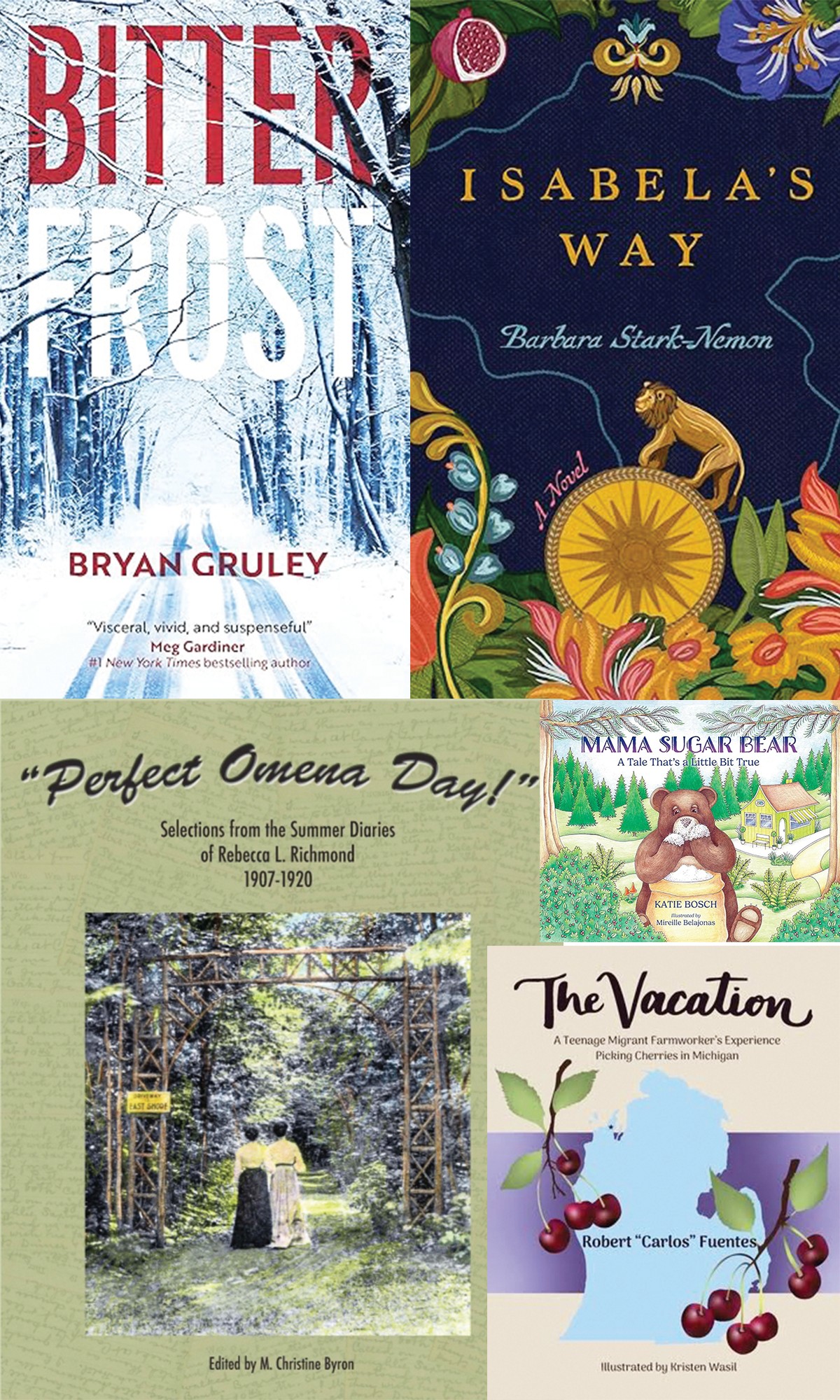
Chris Byron even dedicates her latest work, “Perfect Omena Day” Diaries of Rebecca L. Richmond, to those collectors of ephemera. “This book is dedicated to those people who have saved various historical documents, including photographs, letters, and diaries and donated them to historical archives, libraries, museums, and other history collections, so that they are preserved for future generations.” Ephemeral objects such as diaries, letters, a pair of opera glasses, or a pressed flower within the pages of a book can provide direct access to experiences and perspectives of an individual who is no longer living. Without the ‘collectors’ and ‘savers’ of everyday items, we wouldn’t have the opportunity of uncovering the surprising little kernels of information that turn into bigger historical and cultural discoveries.
Collecting historical postcards of Michigan railroad depots laid the path for the future of Vintage Views. Then, Chris and Tom grew their postcard collection concentrating on postcards of West Michigan and Glen Arbor. Finally, this focus expanded to include historical postcards, tourist brochures, and maps encompassing all of Michigan. In 2025, their collection of vintage Michigan postcards has reached 35,000, and they consider themselves a smaller collection. In their postcard collector’s group, there is one member who has around 250,000 postcards. As Tom offered, once history “gets its tentacles in you” there is no going back.
The spark for researching Michigan transportation and cultural history began as Chris and Tom made more “connections” through tangible ephemera such as diaries, receipts, and pictures they came across at various antique and postcard shows. What is the attraction for this research into Michigan travel history? According to Chris, it’s “finding something you didn’t know you were looking for.” Truth. In the early years of research, Chris and Tom wanted to know “how [Michigan] was portrayed” and “what drew people to the area?”
As the research treasure hunt heated up and rabbit holes were traveled, Tom commented that, maybe surprisingly, contemporary “ads offer[ed]” as much “context to history as a photograph,” and there were “treasures buried in some vintage advertisements.” As an example, a 1920s Glen Arbor resort brochure claims, “There are no sneezes in Glen Arbor breezes” pointing out that tourists with allergy concerns wanting to breathe healthy, cool air versus the hot, congested summer air of big cities like Chicago would be attracted to the area.
In asking about any surprises discovered during their many research sessions, Chris and Tom offered two examples. One surprise was finding out about Camp Davis located around Glen Arbor from 1902 – 1908. This camp served as an engineering and surveying camp for University of Michigan students. The other surprise finding led to Chris’ latest book on Rebecca L. Richmond, an early 1900s Omena summer resident. A forgotten box of papers from the early 1900s were tucked away in an Omena cottage connected to Richmond. Essentially, this box of 100-plus years treasure trove of papers was sitting in a corner, waiting to be re-discovered. As I can attest, touching and reading precious primary documents are a privilege and open a doorway that allows us to make a connection to a person or event.
According to both Tom and Chris, “writing was a fluke.” In exhibiting their postcard collection and research stories during a slideshow to a packed audience held in Empire in early 2000, a publisher approached Chris and Tom about writing a book. As Tom realized, there were “not many books written on tourism in Michigan” at the time. When they submitted the first manuscript layout, the publisher claimed it was “the most organized manuscript ever.” This is not a surprise when considering Tom’s expertise as a vintage print creator, genealogist, and researcher along with Chris’ talents as a notecard designer, librarian, and researcher. Given the unexpected opportunity to explore their love of Michigan and use their research savviness, they have created a Michigan Tourism Canon of works to be treasured in their Vintage Views Series.
What future projects are on the docket for Chris and Tom? Chris expressed an obsession “with dance halls” and “tea houses” as well as other varied projects connected to tourism and up north Michigan ephemera.
As I savored my time with Chris and Tom during our Michigan tourism history master class, my head was spinning with ideas for my own rabbit holes to pursue. Their years of work are directly responsible for our understanding and connection to historical people, events, and locations throughout the Leelanau Peninsula and beyond. When you see them in the area, I encourage questions about their pursuits, as anyone will find that both Chris and Tom are very generous and patient with their time and sharing their knowledge. Finally, to all those ‘collectors’ who hold on to history, thank you.