Disgusted at Trump, Canadians boycott Michigan travel

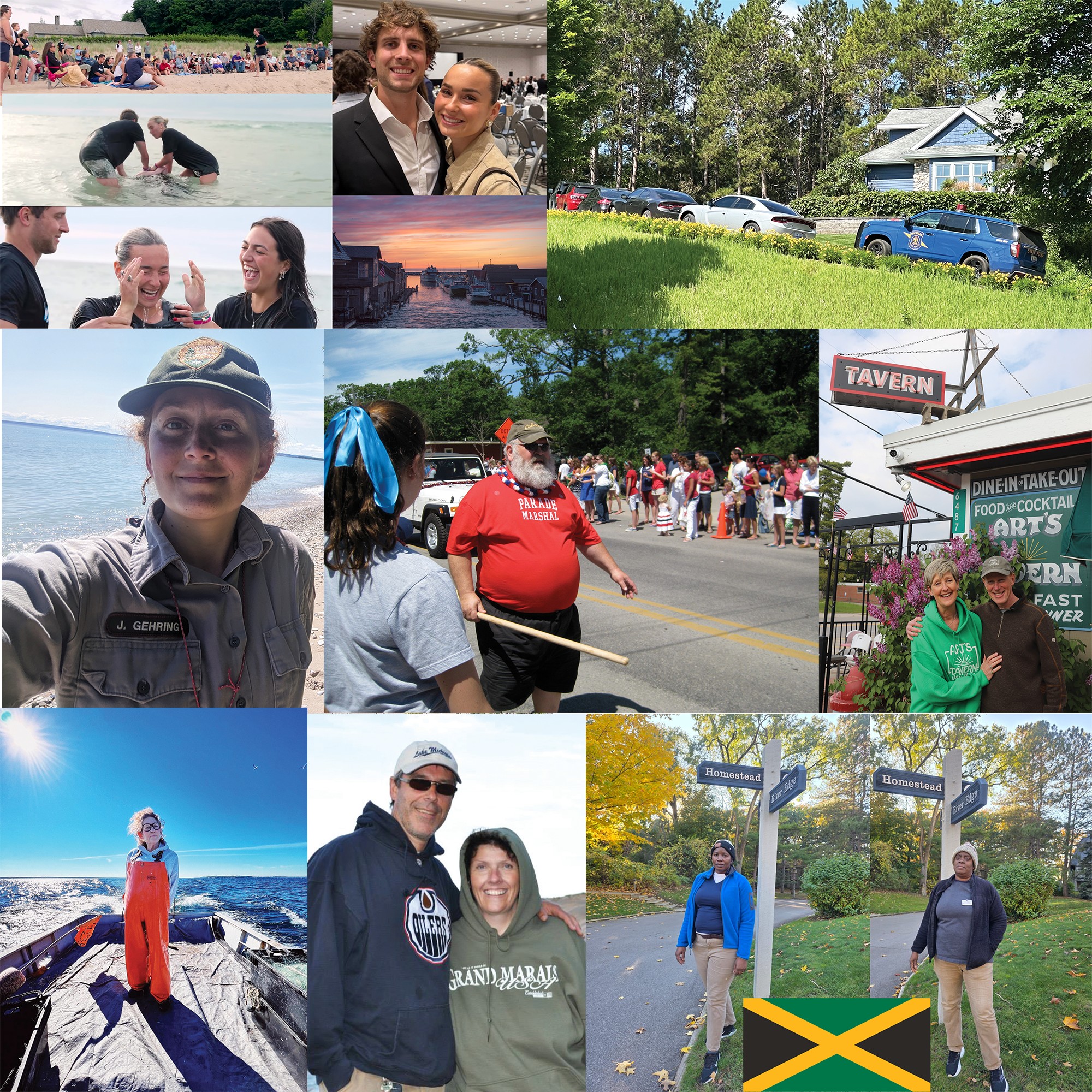
Photo: Canadians Liz Marion and her husband have enjoyed many vacations in Michigan, including the Pictured Rocks National Lakeshore in 2014. But they’re upset by Trump’s tariffs and “51st state” threats. They won’t visit the U.S. this year.
By Jacob Wheeler
Sun editor
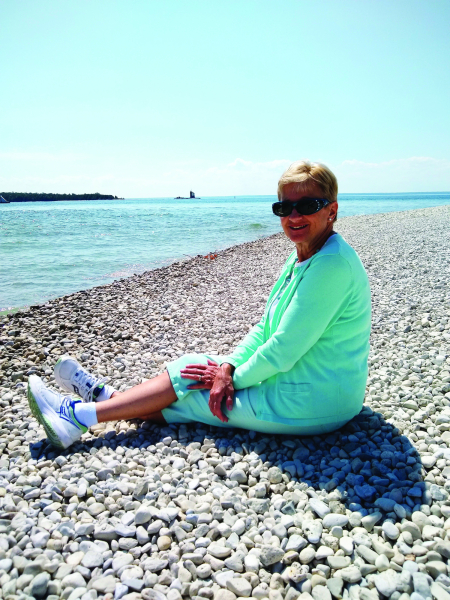
“The current situation certainly convinced me that Carney as Prime Minister would be best for dealing with the economy and the Trump administration,” said Susan Graham, pictured here on Mackinac Island.
“I’m terrified to cross the border.” “We’re disgusted.” “The annexation threats and tariffs are a ‘screw you’ to Canada.” “We have canceled our 2025 vacations in the USA. I no longer feel welcome there.” “I won’t go until Trump is gone. What he’s doing is horrific.”
Those are the voices of Canadians who live in Sault Ste Marie, Ontario—just across the international border from Michigan’s Upper Peninsula, and longtime friendly neighbors in trade, in culture, in shopping, and in hockey.
Apparently, no longer. Or, at least, not until Trump leaves office.
Canadians the Glen Arbor Sun spoke to this spring voiced fear of crossing the border and facing aggressive U.S. federal agents or meeting MAGA faithful in Michigan. Several referenced stories they have heard of cars with Canadian license plates being keyed in Sault Ste Marie, Michigan, and hearing taunts of “go home.”
One worried about heightened racism in the United States and said she won’t cross the border because “my partner has dark skin.”
Others have read about non-U.S. citizens who accidentally drove onto the Ambassador Bridge between Detroit and Windsor, Ontario, and were arrested and charged with deportation.
Canadians who came to shop and dine at restaurants in Michigan once a week, and sometimes took weekend trips to Petoskey, Traverse City, or the Sleeping Bear Dunes National Lakeshore, said they are deeply insulted by Trump’s threats to annex Canada as a 51st state. They have also watched as his international trade tariffs have hurt their country’s economy—including the cross-border automobile manufacturing industry—and “tanked” their investments.
In response, Canadians have boycotted products made in the United States, including wine, whiskey, and products ordered through Amazon, which is owned by multibillionaire, and Trump supporter, Jeff Bezos. They have also canceled day trips and vacations here through 2025, and perhaps for the next four years.
The boycott and travel cancelations could take an economic toll on Michigan’s tourism economy this year.
According to Bridge Michigan, which cited statistics compiled by U.S. Customs and Border Protection, the number of travelers crossing international borders into Michigan dropped 11 percent for the second consecutive month in March compared to the same time last year. Car traffic, which reflects individuals and families, fell by 18 percent.
“This is what happens (when) those stories of long-term detention, getting phones ripped away from you, trickles down to folks in Canada,” U.S. Representative Rashida Tlaib (Democrat) said on a press call last month that focused on people who had been apprehended on the Ambassador Bridge.
Michigan saw 143,275 fewer border crossings by car from Canada compared to March 2024. The tally was down by 108,000 people in February compared to last year.
The U.S. Travel Association warned that a 10 percent decline in Canadian tourism nationwide could result in the loss of 14,000 jobs and $2.1 billion in economic activity.
“Michigan always felt like a second home to me,” said Cindy, who preferred that her last name be withheld. “I used to go once or twice a week, but I won’t go any longer.”
Sault resident Jessica Mills’s family frequently vacationed in both Michigan’s Upper and Lower Peninsulas, including at the Great Wolf Lodge in Traverse City and Boyne Mountain. Since Trump’s inauguration, she has visited Michigan only once and canceled upcoming trips across the border.
“I no longer feel welcome there,” she said.
“It’s unbelievable to see the rapid decline of our two country’s longtime trust and mutual love,” said the owner of an Ontario backcountry ski lodge that welcomes winter tourists, many from Michigan and the Midwest. She’s also a longtime attendee of the Bliss Fest music festival in Cross Village, Michigan, but has decided not to make the trip this summer.
“I literally don’t know of any Canadians that haven’t canceled trips to the USA,” said Stephen Scott.
One Sault resident’s daughter had planned to attend a dance competition in Grand Rapids, but the event was rescheduled in Canada.
A Sault resident named Christine felt stabbed in the back by the Trump regime’s rhetoric and actions since he returned to the White House on Jan. 20.
“We just sent a bunch of workers to help with power outages [from the ice storm in Northern Michigan in late March],” she said. “We sent firefighters to help with the southern California wildfires [in January].”
Canadian antipathy toward the current U.S. government, its policies and rhetoric, were a crucial factor in their election on April 28 of Mark Carney as their new prime minister—even though Carney’s Liberal party trailed the opposition Conservatives by as many as 30 percentage posts in the polls earlier this year. Carney was seen by many as the better candidate to stand up to Trump and represent Canadian independence.
“The current situation certainly convinced me that Carney as Prime Minister would be best for dealing with the economy and the Trump administration,” said Susan Graham.
Holly Holmes, a U.S. citizen who lives in Sault Ste Marie, Ontario, said she plans to apply for Canadian citizenship.
“I will only be crossing the border to visit my mom and siblings,” said Holmes. “When I do that, I won’t be bringing a smartphone or computer, just a flip phone.
“I have replaced every single item I purchase with Canadian products, including phasing out Amazon. Our choices all matter.
“I don’t recognize my country and am absolutely disgusted.”