
The dogs of New Orleans
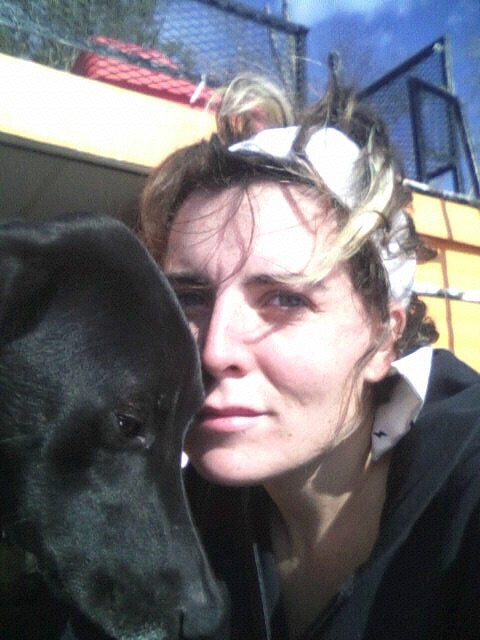
By Andrea Maio
Sun contributor
 It was my first tropical winter, and the culture of New Orleans had me in slow motion shock. I arrived there on Christmas Day, after a tough boat trip down the Mississippi river. My boat had broken down in a nearby town and left me stranded from my family for the holidays, so I rented a car and drove with my dog into the city. There, I found a dingy bar on Decatur Street offering free Christmas dinners to all of their customers. They didn’t mind dogs in the bar, so I brought in my lab mix Butch and sat, and drank with the regulars. By the end of the night I had secured a comfortable, safe place to sleep for my dog and me in the quarter, a possible apartment and a few potential house-painting gigs. The brooding, pony tailed artist that I met at the bar took me aside before he left and said,” I can tell you’re no dummy, but you need to be careful, you’ve never known a city this dark. It can kill you. It was started by pirates and its still run by them.” Walking home that night, it started to snow. The first time it had snowed in New Orleans in 50 years. People and their pets stopped on the street and looked up, hardly believing their eyes.
My first apartment in New Orleans was one block off of St. Charles on Martin Luther King Blvd. where the rent and the elevation are lower. The building was two stories high, and being reclaimed by the earth: vines crawled up the dilapidated porch and through the iron trellis and crept up the edges of the peeling roof. In my bedroom there was a hole in the floor through which I could see the downstairs apartment. A mentally impaired elderly man lived there and liked to watch The Wizard of Oz over and over and over again, always laughing at the same parts. The television was right below the hole in my bedroom, so drifting off to sleep, or waking up in the morning was to the spooky soundtrack of Judy garlands questioning voice lost in Oz. “Toto, I have a feeling we’re not in Kansas anymore.”
When I moved to the Treme, another low rent neighborhood closer the quarter, I lived above a retired stripper who was allergic to smoke and other people. We shared one thing in common– we loved dogs, and would go out of our way to take home a stray and nurse it back to health. For her it was a cure for loneliness and a way that she could interact with another living creature without the fear of being judged, for me it was something simple and constructive I could do in a strange city. The rest of the city seemed to regard dogs as pests but my neighbor and I almost looked for opportunities to rescue them. One day she brought home a disfigured mutt with missing eyes. Someone, the vet had concluded, had gauged the dog’s eyes out for fun, and he had been walking through traffic blindly when she stopped her car and picked him up.
Dogs we loved, but our tolerance for one another was as thin as the floorboards. She would get angry if I came home after 9pm, because by simply walking into my apartment, I woke her up. She couldn’t stand the sound of my dog’s nails hitting the wood floor above her, and she would tape my door shut while I was gone, with notes outlining all of my trespasses. One morning, after a night of listening to folk music on low volume, I woke up to her fist going through my bedroom window, shattering glass everywhere. My other neighbor had a pair of pit bulls, and when he heard the commotion he set them loose. They came up the steps and lunged for my dog and me. One of them clamped on to Butch’s neck and shook and shook, and so I grabbed on to her neck and shook and shook until the owner came out and called them off. As he came out, so did my third and final neighbor, in her house coat, her face red with anger, screaming at my dog and I to get the hell out of her neighborhood.
In places like the Treme, a poor, mostly black neighborhood that has a gruesome history of slave trafficking, the city always seemed on the verge of popping. There was a constant anxiety in the air that pushed against the facades of the old houses. Its as if being below sea level put pressure on everyone’s head, and that pressure would build and build, and not get released because the heat and humidity kept everyone from moving. Then suddenly someone would get pushed over, something would set someone off, and there would be a chase, a fight, gunshots and sirens. And the crime would be particularly brutal, a mugging turned into a murder, a group of kids killing another kid.
I’ve lived in other poor places, where people are struggling to survive, and none of them felt as lawless and fecund as New Orleans. Physically, it was like a beautiful woman on opium, swallowing herself with her own pursuit for pleasure, in a sumptuous and hazy dream. The moist air and plant life seemed to want to take back the structures and turn them into fertile swamp.
In other neighborhoods, the ones built on higher ground, that pressure was fuel for a celebration. Those that could afford it, had a continual end of the earth party, the dangers of the near by neighborhoods added to the exoticism of the city; vacationers could feel like ex-patriots, enjoying a European fortress in the middle of a third world country. Like with voodoo, New Orleans turned its spooky reputation into capital. The city thrived on its own idea of itself, a romanticized version of the dark and desperate things that happen there. The very things the tourist center of the city held at bay were what made the city rich. Like the river, the reasons for the city’s existence were held behind high, precarious walls. Something was bound to burst.
When I left New Orleans, in early summer of this year, a humid depression had set into me. Even with a college degree, and years of work experience, I couldn’t find a job that paid more than 9 dollars and hour. With the exception of the sick dogs I nursed back to health, and the fancy houses I painted for money on Avenue St. Charles, nothing I started ever got done there. It was hard for me to imagine the lives of the people who lived on my block whose challenges were doubled by their race and the place they grew up in. Walking to work, I used to imagine what would happen if the river spilled over into their city; their thin walled homes would crumble, there would be a scramble to get out, thousands of people would drown. At some point the fantasy became too grim, and I would shake it off, and keep walking. It was clear far before the flood that there was a place in America where people had been forgotten.
When the levy broke and New Orleans started to enter its nightmare, all I could think about were the dogs. The wild pack on my block, the puppy left in the park, the neighbors chained up rottie, all seemed more helpless than the thousands of people who were suffering. I know it was a crazy reaction, but it must have been easier than thinking about the true scope of what was happening. The truth was that thousands of people were suffering due to the inhumanity of people towards other people. For years we knew what could happen. For years nothing was done.
Andrea Maio resides just down M-22 in Elberta and is a freelance documentarian.

