The dogs of New Orleans: 20 years after Hurricane Katrina

By Andrea Claire Morningstar
Sun contributor
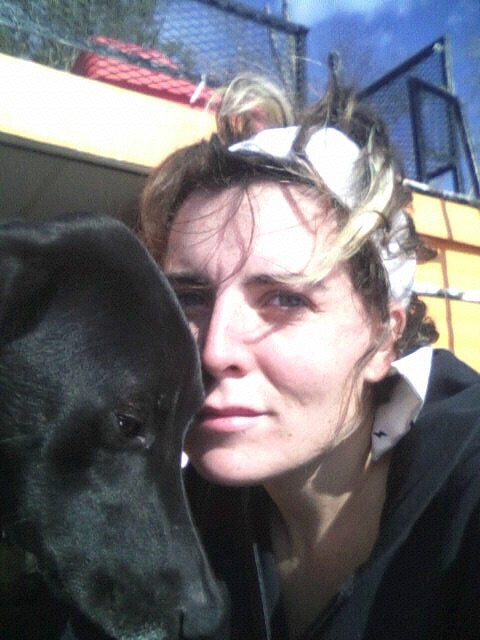
On Christmas Eve, 2004, my old houseboat was half-sunk at the municipal dock in Morgan City, Louisiana. Listing badly to one side, a hole torn in its starboard after a collision with a tree along the flooded banks of the Mississippi, it had carried me from Winona, Minnesota, downriver to just north of Baton Rouge before giving out. A commercial tugboat captain took pity and dragged me through the Atchafalaya to safer harbor. Tied up at the dock with only my dog, Butch, and the cold, wet weather whipping through the tarped holes in the boat, I knew we couldn’t stay.
We caught a ride through stormy weather into New Orleans—my first time in the city—and were dropped in the French Quarter with no plan and nowhere to go. On Decatur Street we found Abbey Bar, a 24-hour refuge where punks and miscreants, artists and expats gathered for a free family-style Christmas dinner. Dogs were welcomed there, so Butch curled at my feet while I ate with strangers.
At one point a man at the bar leaned toward me—he could have been twenty-five or fifty-five, bright eyes set deep in a puckish face, faded jasmine vines inked around his neck, a tooth missing when he grinned. His knobby knees poked out beneath a wool kilt, and each sentence came out laced with the smoke of his cigarette. He told me I’d landed in a city run by pirates, and if I wasn’t careful it would swallow me whole.
By the morning, I had a couch to sleep on, and a couple of house-painting gigs. When we stepped back outside, snow was falling—the first in fifty years—and people and their pets stood in the street, looking up in wonder at the impossible sky. My first apartment was just off St. Charles on Martin Luther King Boulevard, in a sagging two-story building being reclaimed by vines and moisture. In my bedroom there was a hole in the floor that opened onto the downstairs apartment, where an elderly man lived alone. He watched The Wizard of Oz on repeat, laughing at the same moments every time. Judy Garland’s voice drifting through the boards made me feel like I’d slipped into Oz too.
Later, when I moved to Tremé, I lived above a retired stripper who was allergic to both smoke and people. What we shared was a love of dogs. She and I would each go out of our way to take in strays and nurse them back to health. For her it was a cure for loneliness, a way to connect without fear of judgment. For me, it was something steady I could do in a strange city that gave me a sense of purpose.
One day she brought home a disfigured mutt with missing eyes. A vet determined someone had gouged them out for fun; the dog had been wandering blind through traffic until she stopped to rescue him.
Dogs we loved, but our tolerance for each other was thin as the floorboards. If I came home after nine, she claimed the sound of my steps woke her. She couldn’t stand Butch’s nails clicking on the wood above her head. She taped my door shut with angry notes, and one morning—after I’d played folk music on low—I woke to her fist punching through my bedroom window, spraying glass across the room.
The neighbor down the hall heard the commotion and set loose his pair of pit bulls. They charged up the stairs, lunging at Butch and me. One clamped onto his neck and shook; I grabbed its collar and shook back until its owner pulled them off. Another neighbor stormed out in her housecoat, face red with rage, screaming at us to get out of her neighborhood.
In Tremé, life always seemed to teeter on the edge. Heat and humidity pressed down until it broke loose in sudden bursts: a fight, a chase, gunshots, sirens. Violence could turn savage without warning. And yet, on Sunday afternoons, a brass band would come down Villere Street, horns lifting the air, and for a while the same pressure fed joy instead of rage. That tension seeped into me. A humid depression settled over my days. On my walks to house-painting jobs, I’d sometimes picture the river spilling over, houses collapsing, people scrambling through rising water. Then the thick, jasmine-scented air would fill my lungs and smother the thought, leaving me dazed, as if the city itself wanted me to drift along half-asleep, the way it did.
When the house-painting gig came to an end and my money dried up, a lifeboat appeared in the shape of a twenty-year-old Saab that a friend needed driven to Chicago. I put my backpack and the steering wheel of my old boat in the trunk, Butch in the passenger seat, and headed north across Lake Pontchartrain without looking back.
When the levees broke a few weeks later, and the city slipped into nightmare on my television screen in Michigan, all I could think of were the dogs—the pack roaming my block, the puppy abandoned in the park, the neighbor’s chained rottweiler. I cried for the dogs.
Where was my downstairs neighbor with her bandaged fist? Had the water reached the second floor with its shattered glass windows? The old man singing along to The Wizard of Oz? The second line band that graced Villere Street on Sunday afternoons?
But I cried for the dogs. Because dogs—dogs I could picture saving. And though I’d failed at that, the story could still stay small. The grief, contained. While the people of New Orleans—their grief, their need—were unfathomable. To cry for them, for their families and family homes, for the histories being washed away, would be to indict myself. New Orleans deserved more than I ever gave her. And my tears just made the floodwaters rise.
Andrea Claire Morningstar is an Emmy Award–winning filmmaker and storyteller whose work has appeared with PBS, NPR, BBC Storyworks, and USA Today. A Michigan native, she lived for years in the Traverse City region and still returns with her family to Empire every summer.
This essay first appeared in 2005 in the Glen Arbor Sun under her maiden name, written during a time when she was still unmoored. She is now the co-founder of Mamou Spirits, a New Orleans–based Amaro company rooted in Louisiana folk traditions, and lives in New Orleans with her husband, two children, Baci—a 12-year-old dog and the successor to her beloved Butch—and a newly adopted kitten.