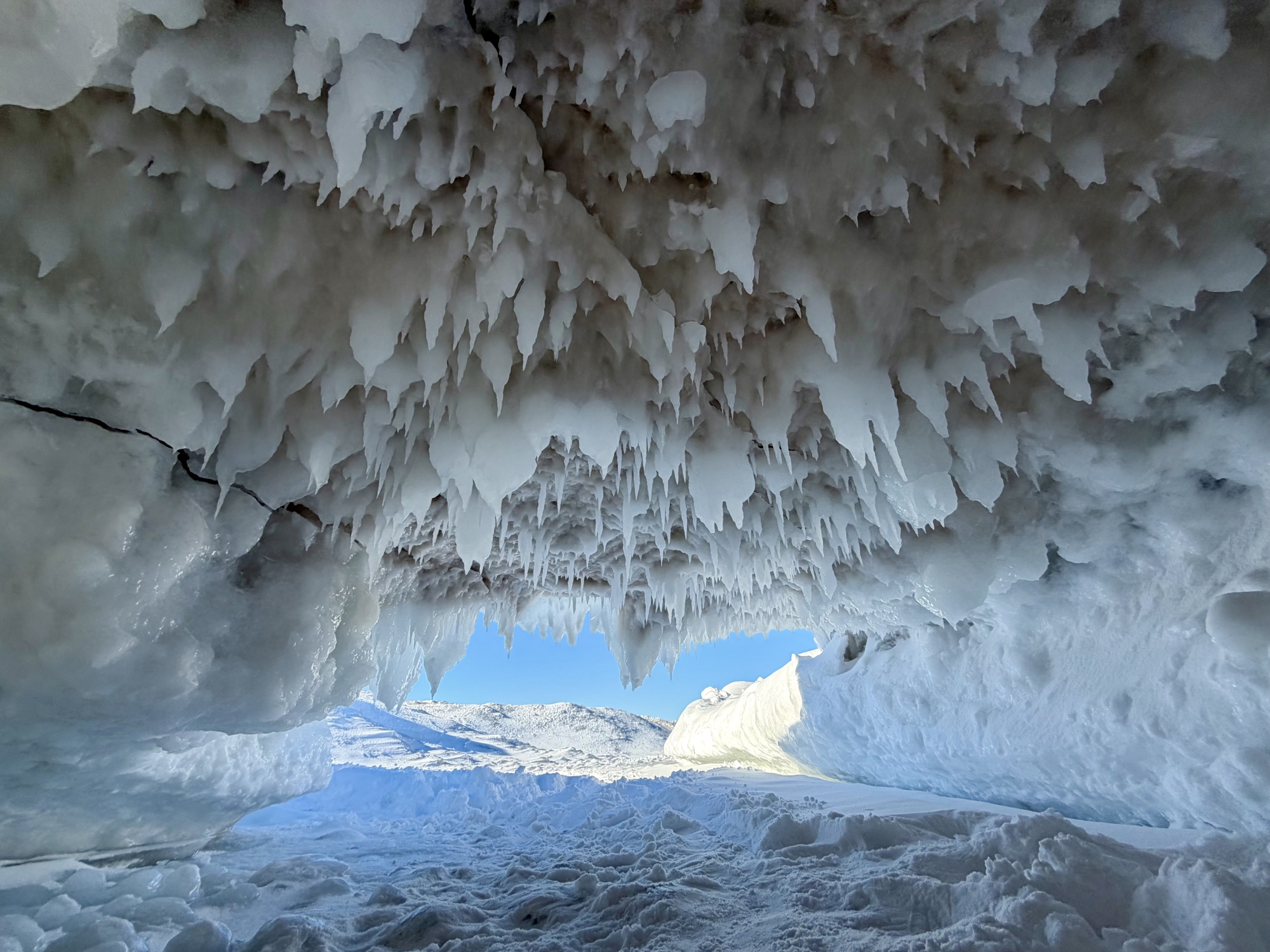
Scientists are asking for help from the public this winter to measure how thick the ice is on the Great Lakes and inland lakes. Data submitted by ice fishers and other people who spend time on frozen lakes could improve the models that forecast ice cover on the Great Lakes. Satellites do a good job at capturing how much ice there is, but not how thick it is, according to researchers at the Great Lakes Observing System (GLOS) in Ann Arbor. More data could give researchers insight as to how climate change is altering ice cover in the region and provide important safety information for people out on the ice.