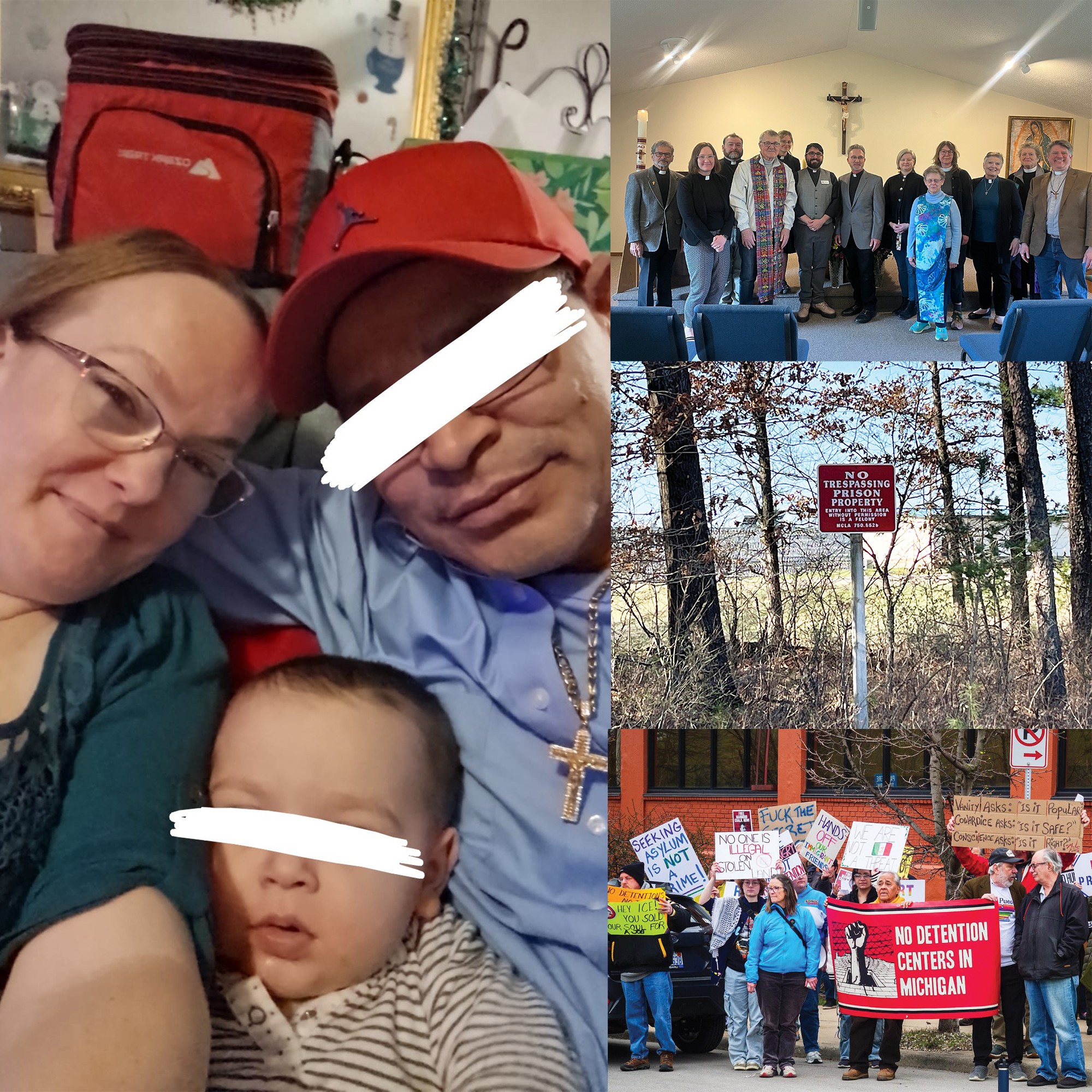
Soon after Lynn’s husband arrived on March 5 at the North Lake Processing Center — the mammoth ICE detention center in Baldwin, Michigan — the food began to make him sick. “I haven’t seen an orange the whole time I’ve been here,” the husband told Lynn, a U.S. citizen and Traverse City resident who shared their family’s story with the Glen Arbor Sun this week. The couple, who have a 2.5-year-old son, worship at Guadalupe Chapel in southeastern Leelanau County, where local clergy held a prayer service and press conference on Monday to illuminate the plight of detainees in federal custody. Lynn’s husband is one of several immigrants detained, as ICE detentions mount in Northern Michigan.
Posts
Traverse Indivisible and Leelanau Indivisible are teaming up to hold a third No Kings national day of action in Traverse City on Saturday, March 28, as millions gather nationwide to protest the Trump administration’s policies and politics, at home and around the world. Organizers say they expect as many as 7,000 people to march in Traverse City “as small-town America pushes back against authoritarianism.” In a city of 16,000 people, that would make No Kings Day one of the largest protests in Northern Michigan history. The march begins at 1 pm at F&M Park in downtown Traverse City. Click here to read our coverage in the Glen Arbor Sun of the impact of the Trump administration’s politics and policy on Northern Michigan communities.
Share this:
- Share on Facebook (Opens in new window) Facebook
- Share on X (Opens in new window) X
- Email a link to a friend (Opens in new window) Email
- Share on Reddit (Opens in new window) Reddit
- Share on Pinterest (Opens in new window) Pinterest
- Share on LinkedIn (Opens in new window) LinkedIn
- Print (Opens in new window) Print
- Share on Tumblr (Opens in new window) Tumblr
With daily reports flashing from major Midwestern cities of Immigration and Customs Enforcement (ICE) attacks on immigrants and communities of color, the Grand Traverse Band (GTB) of Ottawa and Chippewa Indians took the unprecedented step today of issuing an advisory to its tribal members to coach them on how to handle encounters with ICE agents. GTB chair Sandra Witherspoon told the Glen Arbor Sun that, while she has heard rumors of increased ICE activity in northern Michigan, she has no concrete evidence of a stepped-up presence in the coming days. Nevertheless, out of an “abundance of caution,” she said that tribal government decided to issue the advisory. Today’s advisory from the Grand Traverse Band encourages tribal members to carry their GTB Tribal ID card and to calmly identify their citizenship status if confronted by a federal agent. It also mentioned racial profiling practices now permitted under the Trump regime.
Share this:
- Share on Facebook (Opens in new window) Facebook
- Share on X (Opens in new window) X
- Email a link to a friend (Opens in new window) Email
- Share on Reddit (Opens in new window) Reddit
- Share on Pinterest (Opens in new window) Pinterest
- Share on LinkedIn (Opens in new window) LinkedIn
- Print (Opens in new window) Print
- Share on Tumblr (Opens in new window) Tumblr
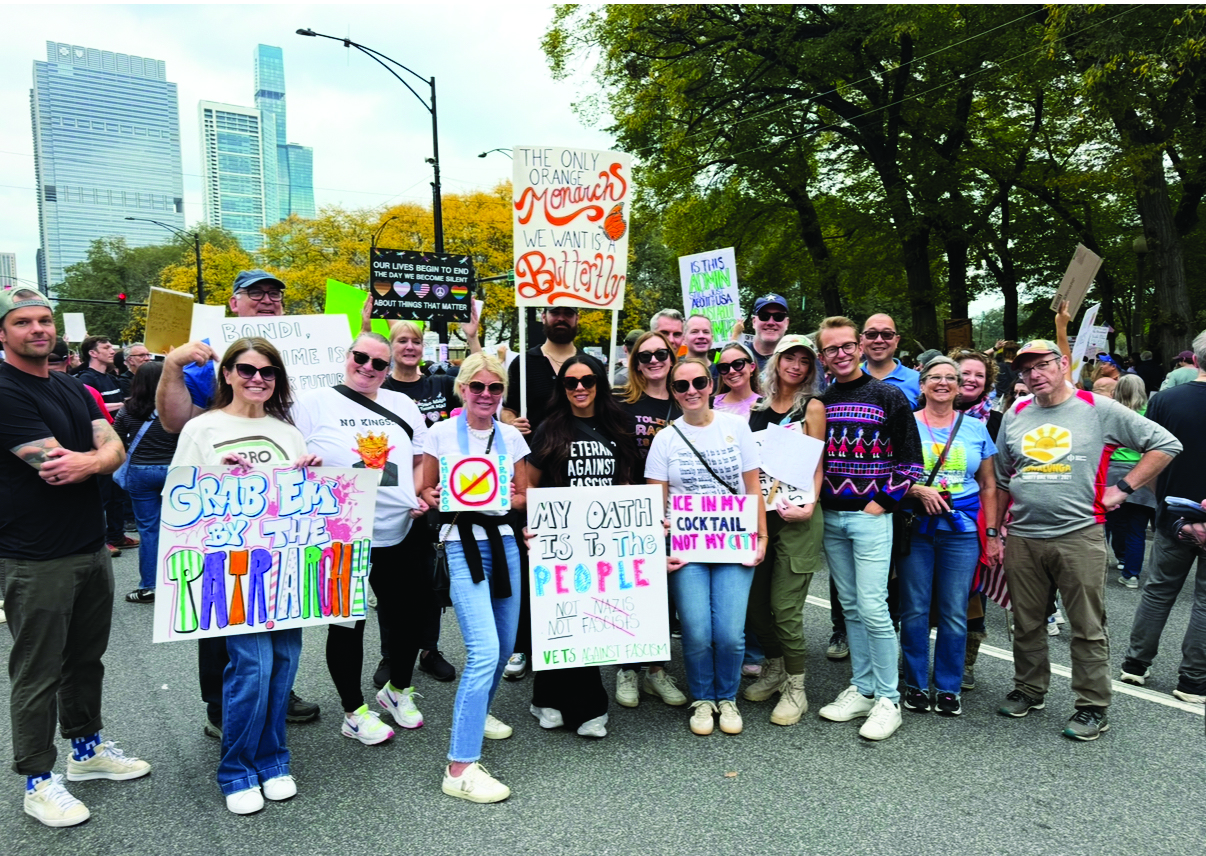
Katie Dunn, a resident of Glen Arbor and Chicago, witnessed and wrote about Immigration and Customs Enforcement’s siege of Chicago neighborhoods last month. Dunn volunteered outside a school in a Latino neighborhood to safely escort students home, joined a protest outside the Broadview detention center, and found hope and resolve at the No Kings rally in Grant Park, which drew more than 100,000 demonstrators on Oct. 18. “Recent reports of ICE sightings near the school had sent a chilling wave through these already marginalized Brown and Black communities,” she wrote. “Countless parents, gripped by the tangible fear of being detained or disappeared by ICE in the mere minutes it takes to get their kids home from school, had entrusted their children’s safe passage to older siblings or neighbors. The whole landscape felt entirely dystopian: ICE’s menacing presence in the neighborhood had transformed a routine school dismissal into a fraught daily ritual.”
Share this:
- Share on Facebook (Opens in new window) Facebook
- Share on X (Opens in new window) X
- Email a link to a friend (Opens in new window) Email
- Share on Reddit (Opens in new window) Reddit
- Share on Pinterest (Opens in new window) Pinterest
- Share on LinkedIn (Opens in new window) LinkedIn
- Print (Opens in new window) Print
- Share on Tumblr (Opens in new window) Tumblr
Citizens from across Michigan’s lower peninsula have traveled to Baldwin this spring, packed village council meetings, held demonstrations and called for officials to stand against the reopening of a nearby immigrant detention center. The 1,800-bed, maximum-security North Lake Correctional Facility, owned by the for-profit prison corporation Geo Group, is the largest such facility in the Midwest and second-largest in the nation. It reopened on June 16. The fact that the prison will most likely hold non-white immigrants stands out in this part of Michigan. Baldwin, a rural town of 900 with a large historically Black minority, is five minutes from the unincorporated community of Idlewild, which once thrived as a vacation refuge known as “Black Eden.”
Share this:
- Share on Facebook (Opens in new window) Facebook
- Share on X (Opens in new window) X
- Email a link to a friend (Opens in new window) Email
- Share on Reddit (Opens in new window) Reddit
- Share on Pinterest (Opens in new window) Pinterest
- Share on LinkedIn (Opens in new window) LinkedIn
- Print (Opens in new window) Print
- Share on Tumblr (Opens in new window) Tumblr
Leelanau County Sheriff Mike Borkovich will face tough questions from commissioners, and comments from citizens, at the Board of Commissioners meeting on Feb. 11 — following his recent statements that, if asked, he would cooperate with federal agents arresting and deporting undocumented immigrants. However, Borkovich considered immigration raids at Leelanau County schools “unlikely”. During a Jan. 10 meeting with the superintendents of the county’s four public schools, he said he didn’t think it would be “necessary” for federal agents to visit local schools. Days after Trump’s inauguration, a handful of Leelanau farmers met with Borkovich in an effort to convey to the sheriff the importance of immigrant and migrant farmworkers to the region’s agricultural economy. The Hispanic community is crucial to Leelanau’s agricultural workforce. Out of 22,000 county residents — according to the latest Census — as many as 1,000 identify as Hispanic or Latino. Many have an undocumented parent or family member living here in northern Michigan, now as rooted here as the pine trees, though they may have crossed illegally into the United States years ago.
Share this:
- Share on Facebook (Opens in new window) Facebook
- Share on X (Opens in new window) X
- Email a link to a friend (Opens in new window) Email
- Share on Reddit (Opens in new window) Reddit
- Share on Pinterest (Opens in new window) Pinterest
- Share on LinkedIn (Opens in new window) LinkedIn
- Print (Opens in new window) Print
- Share on Tumblr (Opens in new window) Tumblr
The concept of “the border” is often thought of in regard to the southwestern United States’ southern border with Mexico. When people speak of “the border,” prominent news sources and politicians have made it quite easy to picture the Arizona desert, Rio Grande River, or La Bestia (“The Beast”) train traveling through Mexico with caravans of people. While these are all dangerous realities for people seeking entry into the United States, the border we often don’t think about is the ever-present border which pervades everyday lives even after crossing the physical border. The U.S.-Mexico border may be a significant Port of Entry for many migrants entering the United States, but “the border” often does not end there.
Share this:
- Share on Facebook (Opens in new window) Facebook
- Share on X (Opens in new window) X
- Email a link to a friend (Opens in new window) Email
- Share on Reddit (Opens in new window) Reddit
- Share on Pinterest (Opens in new window) Pinterest
- Share on LinkedIn (Opens in new window) LinkedIn
- Print (Opens in new window) Print
- Share on Tumblr (Opens in new window) Tumblr
In northern Michigan’s vineyards and orchards, ablaze with fall colors, migrant farmworkers are known to sing corrido ballads and folk songs as they pick grapes and apples from sunrise to sundown. But their voices fell silent this autumn when targeted roadside arrests by U.S. Customs and Border Patrol and workplace visits by Immigration and Customs Enforcement (ICE) increased starting in late September.
Share this:
- Share on Facebook (Opens in new window) Facebook
- Share on X (Opens in new window) X
- Email a link to a friend (Opens in new window) Email
- Share on Reddit (Opens in new window) Reddit
- Share on Pinterest (Opens in new window) Pinterest
- Share on LinkedIn (Opens in new window) LinkedIn
- Print (Opens in new window) Print
- Share on Tumblr (Opens in new window) Tumblr
The sudden arrest and transport to a Sault Ste. Marie detention center of a long-time Lake Leelanau resident, father and small business owner on Thursday, March 22, has put Leelanau County’s immigrant community on edge.
Share this:
- Share on Facebook (Opens in new window) Facebook
- Share on X (Opens in new window) X
- Email a link to a friend (Opens in new window) Email
- Share on Reddit (Opens in new window) Reddit
- Share on Pinterest (Opens in new window) Pinterest
- Share on LinkedIn (Opens in new window) LinkedIn
- Print (Opens in new window) Print
- Share on Tumblr (Opens in new window) Tumblr