It’s that time of year again as many in northern Michigan, including here in Leelanau County, begin tapping the maple trees to reap their golden harvest. As Old Man Winter fades, maple trees offer us the first gift of the season—a pure, golden sap which through lots of hard work is transformed into the rich, sweet syrup beloved by many. The 2025, U.S. maple syrup industry produced 5.7 million gallons according to the USDA statistics service. Tapping Maple trees for their sap began long before Europeans settled in America. Early origins of maple sugaring are preserved in oral traditions of Anishinaabeg and other tribes of northern Michigan and northeastern North America. The Anishinaabe people began the deep connection to the tradition and referred to the season as Ziinzibaakwadoke Giizis (Sugar Moon). “We are celebrating a tradition that started with indigenous groups in the American Northeast and Great Lakes that included the Anishinaabe,” said William Derouin, Agricultural Manager at the Grand Traverse Band of Ottawa and Chippewa Indians. This program has grown to include the GTB Sugarbush camp, which will be held in Peshawbestown on March 13-14 and March 20-21.

Leland resident and former Gilchrist Farm Winery chef Jennifer Lee Jackson found herself once again in the racetrack pit during the opening episode of “Top Chef”—just as when she cooked burgers and fried chicken sandwiches as a teenager at the racetrack her father operated in rural Georgia. But this time she honed her craft in front of hundreds of thousands who watched her on television. Jackson and her partner, Detroit native Justin Tootla, are competing in Season 23 of the popular Bravo show, which premiers March 9. Competing on the show “was so much harder than we thought it would be,” Tootla told the Glen Arbor Sun. “We’ve been huge fans of the show and have watched it since Season 1. For 20 years we’ve played ‘Monday morning quarterback,’ judging contestants as much as they were judged on the show. “But when you’re in the mix, when the clock starts and you’re cooking, it’s intense! Being in other people’s kitchens, you have to adapt on the fly.”

Author, activist and bioregionalist Stephanie Mills gave the following address as the keynote speaker at the 18th annual Freshwater Summit in Traverse City on Oct. 30, 2025.  (Mills will appear with artist and community organizer Seth Bernard at the Grand Traverse Circuit from 6-8 pm on Jan. 14 for a program titled “Starting From and Staying With the Nature of Place.” The event is sponsored by the Michigan Citizens for Water Conservation and TitleTrack.)

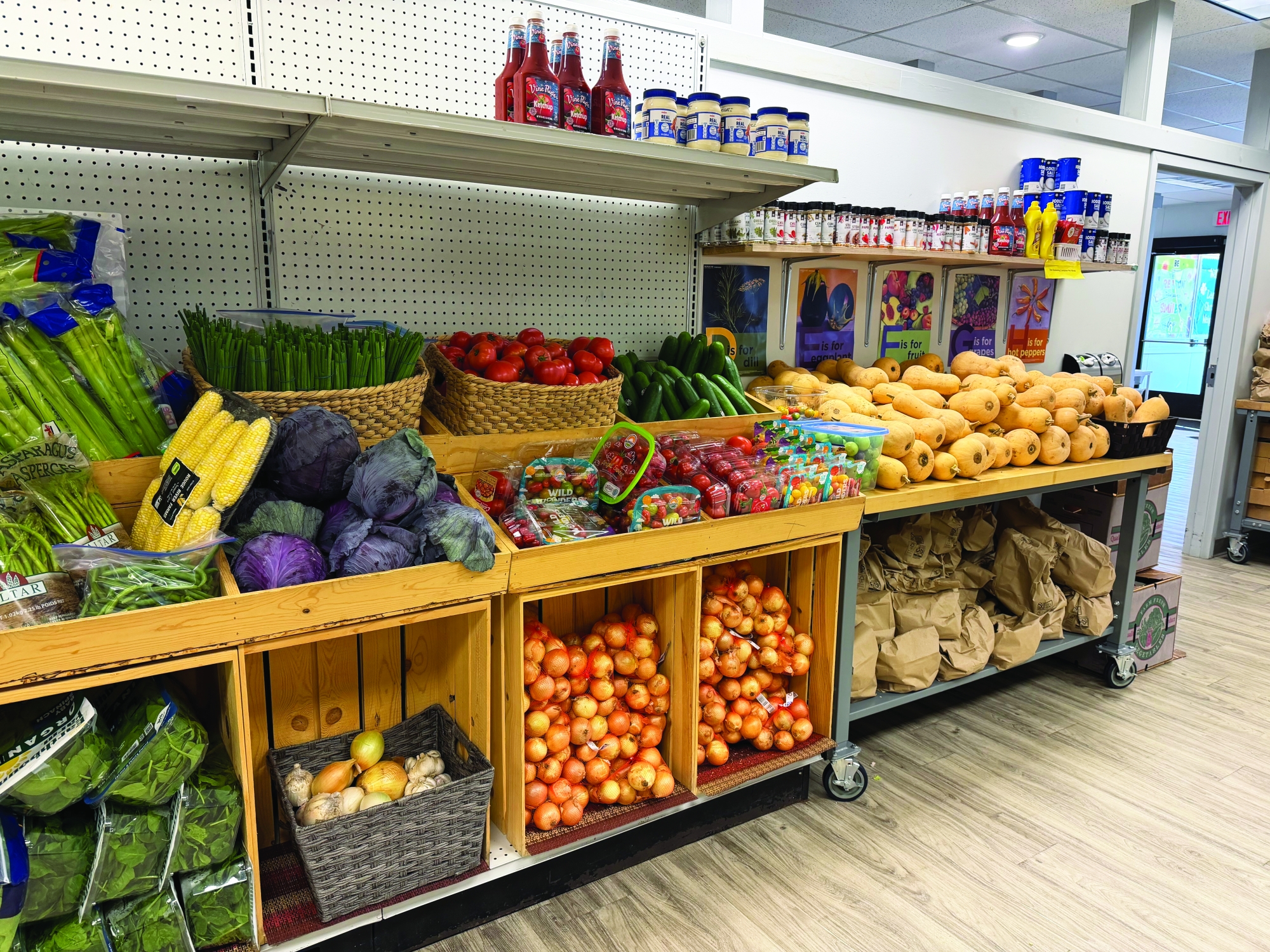
County residents in need of food assistance flock each Monday afternoon to Leelanau Christian Neighbors, where the food pantry shelves are stocked with fresh vegetables, from onions to butternut squash, and canned goods that cover all the food groups. Some lined up early on Nov. 3, two days after the federal government froze funding for SNAP—more commonly known as food stamps—which approximately 42 million Americans rely on for food each month. The floodgates weren’t open yet. “Now this is the month they’ll get way behind,” LCN executive director Mary Stanton predicted. “I’m anticipating December and January will be tough—especially as utilities kick in. But we’ve had a great outpouring of the community anticipating that it will get bad.” At a perilous moment for working people, Leelanau Christian Neighbors are stepping up, along with other community organizations including Food Rescue and the Northwest Food Coalition, 5 Loaves 2 Fish, the Empire Area Food Pantry, Folded Leaf, Lively NeighborFood Market, Art’s Tavern and the Empire Area Community Center—all of which have pledged additional support.

The last jar of last June’s strawberry jam rests empty on my kitchen counter, clotted and sticky. David looks sad. The dog hangs his head as though scolded though he had nothing to do with the quandary we face, writes Anne-Marie Oomen. It was purely luck that last summer’s strawberry jam made it from last solstice to this one. That jam is holy, that jam is winter survival, that jam is antidote to cloud laden days when sunlight is veiled in some stratospheric turbulence the size of Jupiter. That rosy jam spread thick on brown bread reminds us that light does exist. I lick the rim of the jar. Clearly, the succulence that saves us must be replenished.

Kick off the holiday season in Glen Arbor this Thanksgiving weekend with a warm welcome to the annual Holiday Artisan Market, plus two of Glen Arbor’s favorite quirky traditions, the “PJ Party” and the “Bed Parade,” for a weekend full of local creativity, community, and holiday cheer.

The Leelanau Conservancy has unveiled its new logo, which offers a peek through trees and toward a grassy hill with sand dunes, open Lake Michigan, and an island or peninsula in the background. The new logo retains its oval—a nod to the shape of the old logo, which served the Conservancy for 36 years. The old logo featured a ship sailing by sand dune cliffs. “The new refreshed logo feels familiar for our audiences, keeping an alignment with the current logo, but removing elements that do not represent our services,” the Conservancy stated in a press release. “The refresh also captures the scenic character of Leelanau—the ‘peek’ through the trees makes you feel like you are here, in Leelanau.”

Farming is tough, and the margins are small. The same is true for grocery stores and for restaurants. So, of course, Jen and Nic Welty decided to combine all three. They say it’s worth all the work, and judging by the crowds at their farm/café/retail bakery, so too do those enjoying the fruits of their labors. “It’s been pandemonium. We’re taking the winter to regroup,” says Jen. The latest iteration of 9 Bean Rows includes indoor seating as well as the outdoor pizza oven and outdoor seating. Lines for the bread and pastries frequently extend out the door, while diners navigate the ordering process through QR codes at their tables. Part of our series on agritourism and solutions to the farming crisis.

According to the Farmer’s Almanac, there are three key indicators that sweet corn is ready for harvest: “kernels fill the ear,” “silks turn brown,” and “ears begin to angle.” Driving around the peninsula these past couple of weeks, the farm stands are stacked with freshly picked sweet corn on the cob. Some varieties are golden yellow and others are a bi-colored “peaches and cream,” both are sweet, tender, and delicious. “Requiring a delicate balance of timing and technique,” the sweet corn season lasts only a nanosecond, so it is one to savor and appreciate. As the summer crop season comes to a close, these crops could be thought of as meal courses. The bookends of the summer crop season are strawberries, the appetizer course of summer, and sweet corn, the dessert course. The magic of sweet corn is in the first bite. Aside from burning mouths due to impatience waiting for the sweet corn harvest, the initial bite releases a snap of the corn kernels and the sweetness of the juice. Heavenly. Fourth generation Leelanau Peninsula farmer and sweet corn magician Curtis Kelenske and I walked through the 10-acre sweet corn field located off French Road as he offered his favorite recipe for sweet corn: boiled+salt+butter. Simple is better when eating freshly harvested sweet corn.

It’s part farm, part café, part farm market, part AirBnB—and all a dream come true for Samantha Fall. Fall, the owner of Elderberry Farms Estate, has a varied background. She is also a long-time agriculture enthusiast. She worked at Michigan State’s campus farms while earning her degree in communication. After graduating, she started her own mini-farm outside East Lansing, complete with dairy goats, chickens, produce, soap- and lotion-making. She was also a long-standing fan of elderberries.