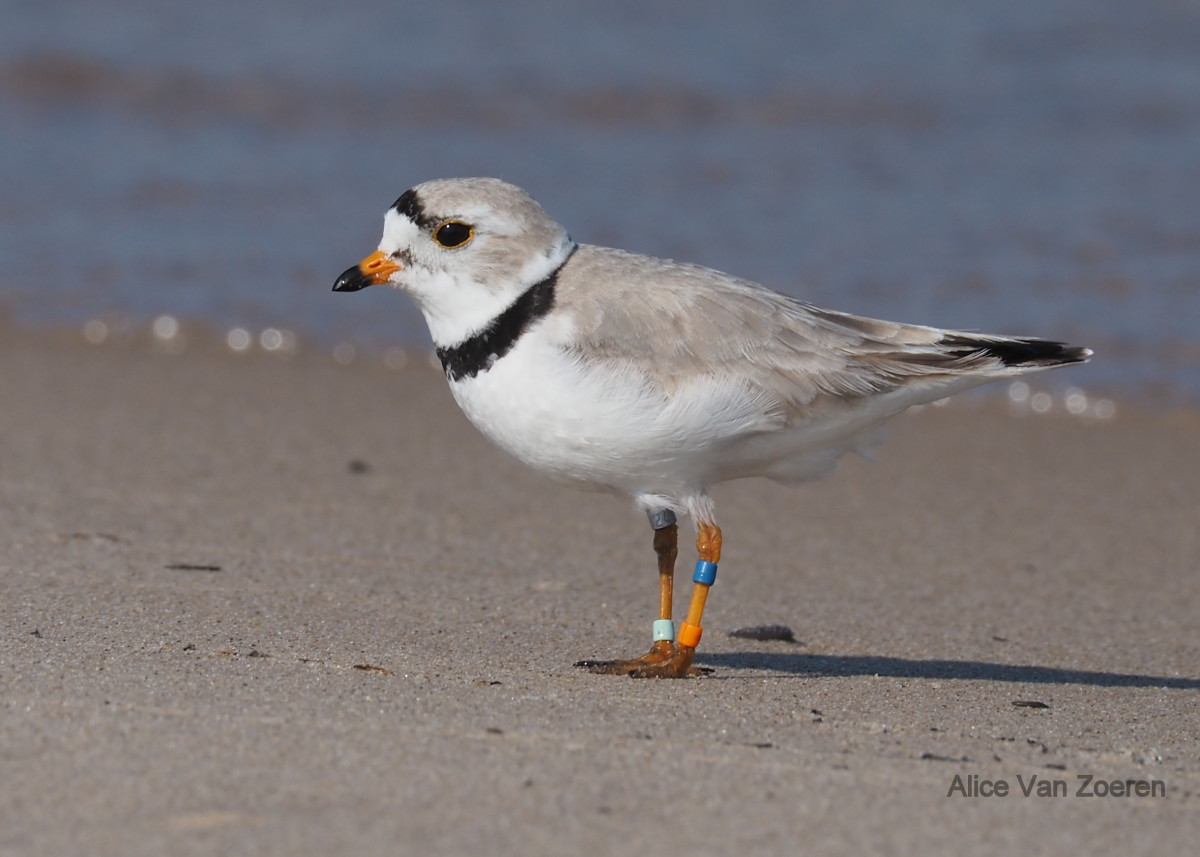
Over the past decade, there has been an increased incidence of bird deaths in Lake Michigan due to Type E avian botulism. Over 6,500 dead birds have been documented within the Sleeping Bear Dunes National Lakeshore alone. Scientists from the National Park Service (NPS), U.S. Geological Survey (USGS), and University of Wisconsin-Milwaukee have been conducting a collaborative research project to determine the causes of these botulism outbreaks — work that includes underwater research in Good Harbor Bay.
Posts
Lyme disease is emerging across North America and in Michigan as the blacklegged tick that carries the disease invades new areas. You can learn about how scientists are investigating this public health issue by attending a program at Sleeping Bear Dunes National Lakeshore on May 12.
Share this:
- Share on Facebook (Opens in new window) Facebook
- Share on X (Opens in new window) X
- Email a link to a friend (Opens in new window) Email
- Share on Reddit (Opens in new window) Reddit
- Share on Pinterest (Opens in new window) Pinterest
- Share on LinkedIn (Opens in new window) LinkedIn
- Print (Opens in new window) Print
- Share on Tumblr (Opens in new window) Tumblr
Dr. Zoran Kilibarda (Indiana University Northwest) will present a talk entitled “Comparison of beach pebbles and coastal dune sands between Sleeping Bear Dunes and Indiana Dunes National Lakeshores” on Friday, April 15 at 9:30 a.m. at the Philip A. Hart Visitor Center Auditorium in Empire.
Share this:
- Share on Facebook (Opens in new window) Facebook
- Share on X (Opens in new window) X
- Email a link to a friend (Opens in new window) Email
- Share on Reddit (Opens in new window) Reddit
- Share on Pinterest (Opens in new window) Pinterest
- Share on LinkedIn (Opens in new window) LinkedIn
- Print (Opens in new window) Print
- Share on Tumblr (Opens in new window) Tumblr
A public program about a key prey fish species in the Great Lakes food web is planned for March 10 at Sleeping Bear Dunes National Lakeshore. Dr. Sarah Delavan (University at Buffalo, State University of New York (SUNY)) will present a program entitled “Hydrodynamic Barriers to Emerald Shiner Movement in the Upper Niagara River” on March 10 at 9:30 a.m. at the Philip A. Hart Visitor Center Auditorium in Empire.
Share this:
- Share on Facebook (Opens in new window) Facebook
- Share on X (Opens in new window) X
- Email a link to a friend (Opens in new window) Email
- Share on Reddit (Opens in new window) Reddit
- Share on Pinterest (Opens in new window) Pinterest
- Share on LinkedIn (Opens in new window) LinkedIn
- Print (Opens in new window) Print
- Share on Tumblr (Opens in new window) Tumblr
Francesca Cuthbert’s love affair began as a summer camper in the 1960s when she “fell in love with coastal dunes and islands in the Great Lakes,” she said June 11 at the opening Research Rendezvous lecture, a monthly series of talks about studies being conducted in the Sleeping Bear Dunes National Lakeshore. The talks are delivered year-round at the visitor center in Empire.
Share this:
- Share on Facebook (Opens in new window) Facebook
- Share on X (Opens in new window) X
- Email a link to a friend (Opens in new window) Email
- Share on Reddit (Opens in new window) Reddit
- Share on Pinterest (Opens in new window) Pinterest
- Share on LinkedIn (Opens in new window) LinkedIn
- Print (Opens in new window) Print
- Share on Tumblr (Opens in new window) Tumblr