Michiganders cross wall to Run across Palestine

 By Jacob Wheeler
Sun editor
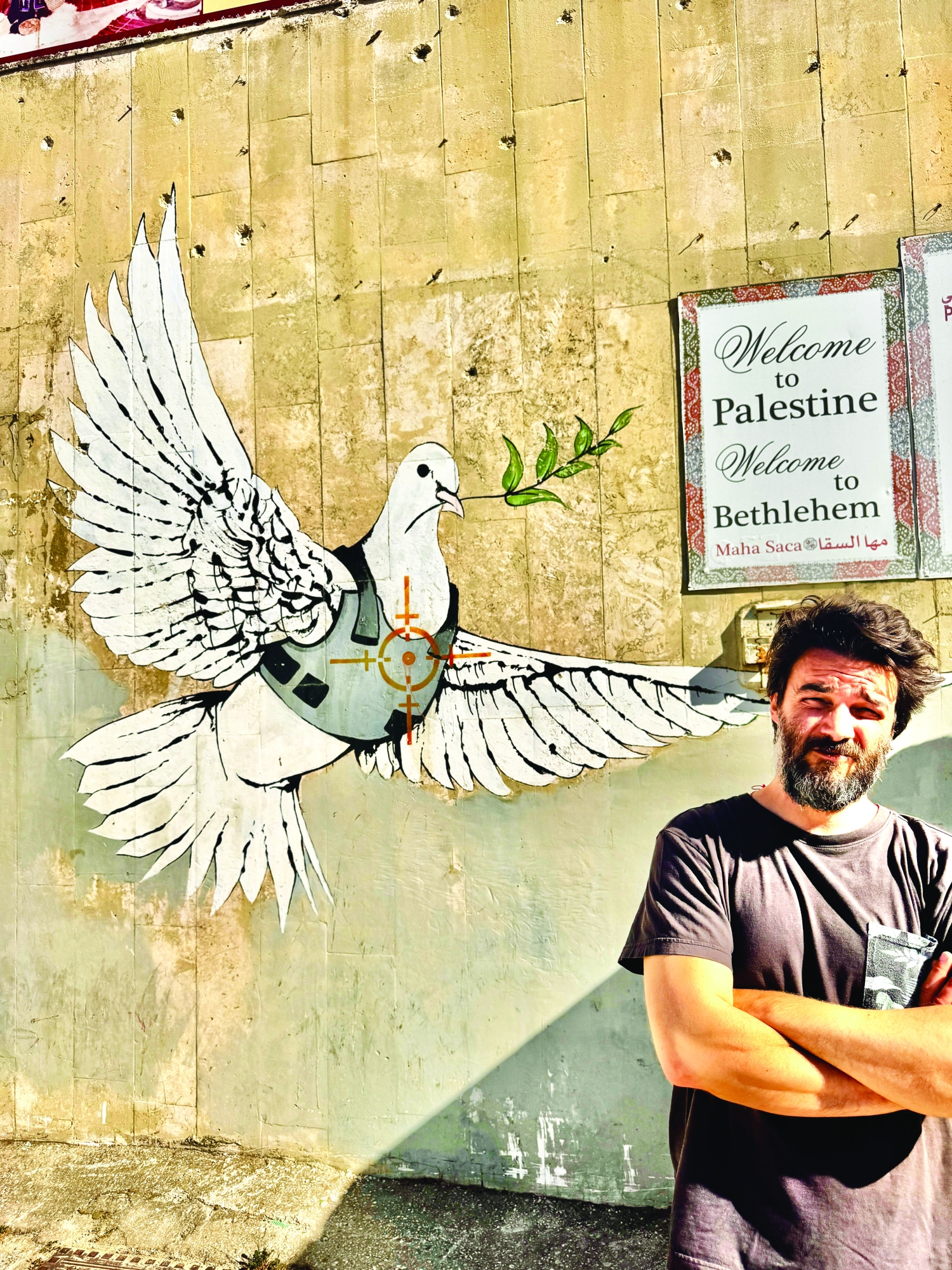
BETHLEHEM — Walls are often built to make us fear what lurks on the other side — be they neighborhood thieves, or people we perceive to be our enemies.
In Jerusalem, the wall the Israeli government has erected between Jewish Israel and the Palestinian West Bank has dissuaded (and scared) Israelis from visiting their Arab neighbors, made life difficult for Palestinians who work in “Israel proper”, and created a general illusion of a tense conflict between these two proud peoples who currently share the same state. This wall, like other walls built for political reasons, is an unsightly and seemingly archaic approach to urban architecture and problem solving. The Berlin wall comes to mind, as does the wall on the U.S.-Mexican border.
But when Traverse City videographer Aaron Dennis and I crossed through Israel’s “Separation Barrier” yesterday and entered the West Bank town of Bethlehem (known, of course, for its Biblical fame), we experienced not fear but joy at the boisterous sounds of taxi cabs honking, food vendors hawking shawarmas, and hard-working Palestinians returning home to their families. For me as a world traveler, it’s always felt euphoric to depart from the solemn and ritualistic “West” and enter a culture where even strangers exhibit hospitality, handshakes and laughs toward each other.
Dennis and I are in the “Holy Land” to document the Run Across Palestine, a philanthropic venture organized by a team of northern Michiganders who will run 129 miles over five days across the West Bank. The project will raise awareness about the struggles facing olive farmers in Palestine and attempt to reestablish sustainable olive growing practices in a place where the economy, culture and identity are rooted in the ancient tree. Forty-five percent of the agricultural land in the West Bank is used for growing olives, employing 100,000 Palestinians. The money raised by the run will go to fund the replanting of olive trees uprooted in recent years, and to fund scholarships for the children of the farmers.
“The olive tree plays a very important role as a symbol of our perseverance,” said Run Across Palestine coordinator Vivien Sansour. “Planting an olive tree is a huge message of hope. When you plant an olive tree, you’re planting a vision for the future.”
In advance of the run, we’ve visited particular villages in the West Bank, including Bethlehem, Beit Jala, Beit Omar and A’twani and talked with activists, professors, clergymen, students and olive farmers to learn about how Palestinian olive farmers are struggling to overcome the occupation and the challenges it poses to their livelihood.
We’ll ultimately produce a seven-part documentary web series entitled “The People and the Olive”, which will tell stories of hope and perseverance in the West Bank. Check back here in the days to come for videos and blog updates from the Run Across Palestine.
In the meantime, here’s a video of students in A’tawani, a village near Hebron, dancing to traditional music and performing a skit about how they experience the occupation of their land, and their interaction with Israel’s settlement communities.