
For Cedar-swamped residents, it’s 60-minute veggie beds
 Pat Stinson
Sun contributor
Two years ago, our household of two joined a CSA (Community Supported Agriculture) and loved the variety of produce we pulled from our bag each week: vegetables, fruit, berries, eggs and the occasional hunk of local cheese, bottle of wine or salad dressing. Our full share was a glorious riot of color and fresh tastes, and it was also overwhelming.
So last year, we bought a half share. The thought was, we would receive all the variety of a full share, just half as much of it. We quickly regretted our decision when the first week yielded two small bags of lettuce — delicious, but definitely on the light side of what we had come to expect. Week after week, our disappointment grew. Soon we were fingering the fresh-picked produce at the Farmers’ Market each Saturday and purchasing everything we were denied in our half share. It was time to repaint this picture.
Raising hopes, not hoops
In December, my neighbor Paula (UpNorthFoodies.com) and I attended an informative hoophouse seminar presented by Adam Montri, Michigan State University’s hoophouse specialist. (A hoophouse is an unheated greenhouse that allows growers to raise crops all year.) We listened carefully, asked questions, took notes and scammed handouts on the presenter’s table. We even took an onsite tour of a working hoophouse, with its warm, moist air smelling of fresh herbs and soil, and the wonderful anomalous sight of greens stretching toward the sun in early winter. The ground inside was littered with fallen cherry tomatoes that we discreetly popped in our mouths as our teacher rattled off names of steel and polyethylene suppliers, and our classmates looked the other way.
We were curious, but neither one of us seriously committed herself to building one of the structures. Sure, there was talk in the car on the drive home about building a small one, or building one just large enough for our two households to share, or some day building a decent-sized one in order to sell veggies in our agriculturally-zoned neighborhood in Cedar. In truth, hoophouses required more investment of time and money than we were prepared to make.
Enter the wagon
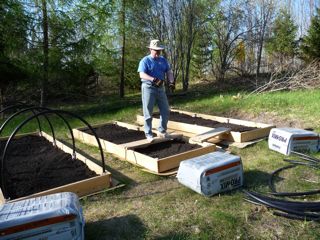
When the Fedco seed catalogue arrived in early February, about the time our food co-op stopped supplying much in the way of local produce, my husband’s ambivalence about starting a garden suddenly gave way to frenzied enthusiasm. (His hobby obsessions have been chronicled previously in this paper.) He unearthed our dusty copy of Jeff Ball’s 60-Minute Vegetable Garden and began constructing, in his head, the maximum number of raised garden beds (four) needed to grow 670-plus pounds of organic produce in 200 square feet, enough to completely supply a household of two for a year.
There are several advantages to growing vegetables in raised beds, as the Chinese do. The method offers maximum yield with minimum space. Seedlings can be planted closer together in nutrient-laden compost with irrigation, potentially producing more veggies by volume. Additionally, the plant’s close quarters help shade each other’s “feet” (retaining soil moisture) on hot summer days and provides physical support during the growing season. There’s less soil compaction as three-foot-wide beds can be easily reached across instead of trod. (Sliding boards above the beds allow for easy raking and sliding boards between the beds offer a place to sit while weeding and picking.) Trellises increase the actual growing area for fruiting vines (cukes, peas, etc.), with the side effect that vegetables not touching the ground have fewer opportunities to become diseased or develop mold — which increases yield on the trellis, while providing more growing space for non-trellised plants. The bed’s small size (in our case, 3 feet x 12 feet) means that it can be easily covered in cooler weather by plastic tunnels which trap warm air and extend the growing season, or draped with netting in warmer weather to shade heat-sensitive plants.
Our book, printed in 1992, suggested the use of treated lumber for the bed frames. We considered substituting cedar but felt that any material that repelled insects and resisted rot “naturally” could contain some chemicals we didn’t need near our soil or plants. Plain pine boards were used, but we plan to rethink the framing materials in the future. The book also suggested tilling the soil underneath and around the beds. Instead, we decided on the no-till, lasagna method of gardening. We began with a layer of corrugated cardboard, covered the cardboard with wet newspapers, (we made sure the paper used soy ink), placed last year’s dead leaves on the newspaper layer and finished with a four-inch layer of organic compost.
Crops grown in raised beds must receive adequate water and be carefully rotated from bed to bed. The latter becomes more difficult with succession plantings, which extended seasons allow. We’re using black plastic for mulch and vowing to keep written records of what is planted where.
We did a number of things not by the book, including building three 3-foot x 12-foot beds instead of four (reason and lack of available level space prevailed), building our beds in the spring instead of fall, and starting our seeds in March. This year, we’ve missed precious cool-weather weeks for growing spinach, lettuces and other crops, but plan to make up for it with succession planting throughout the year.
It’s a grander scale than we’re used to gardening, but as Thomas Cooper said, “A garden is never so good as it will be next year.”