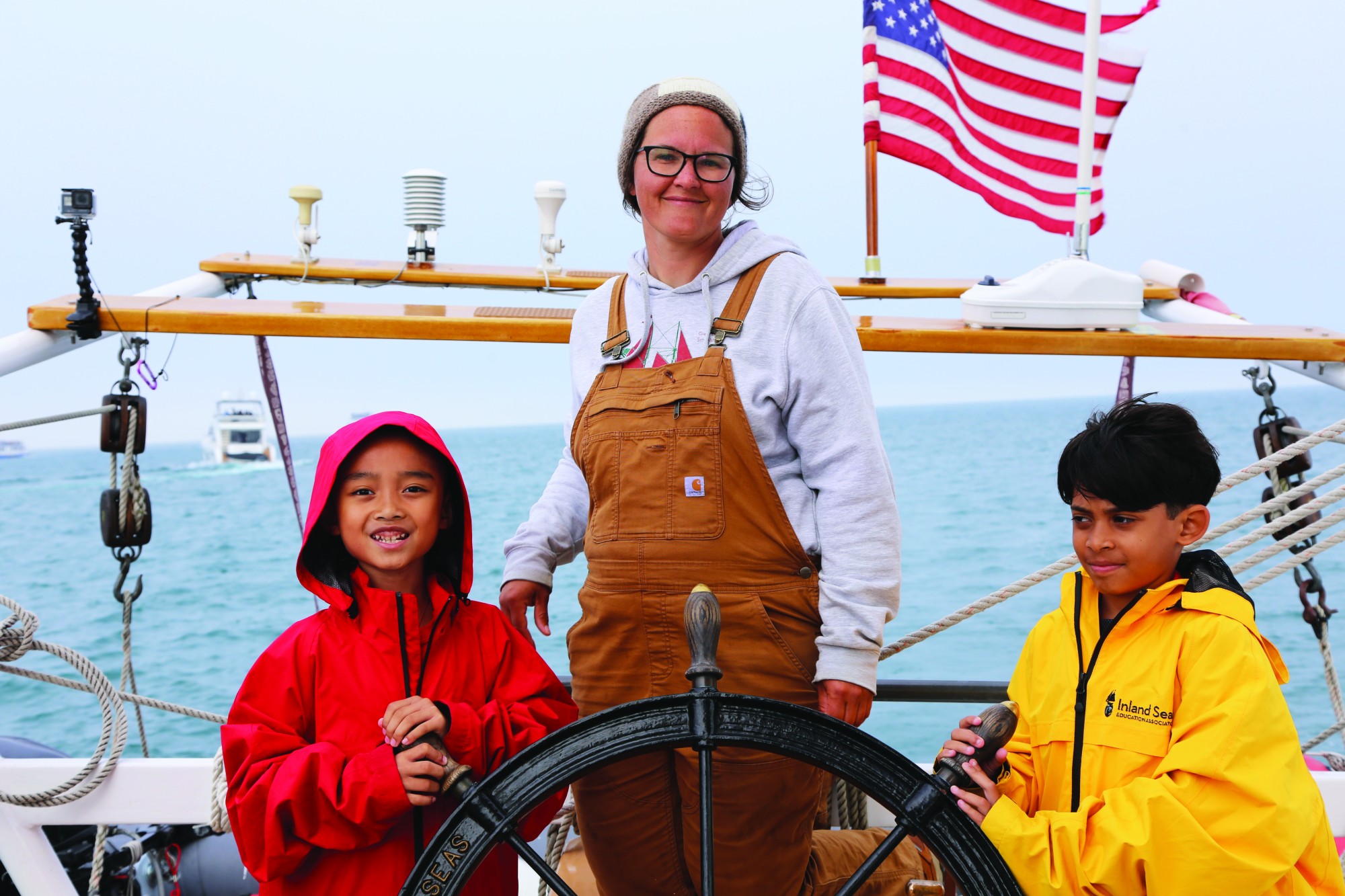
Julie Bennett, who has Glen Arbor roots, plans to row 2,800 miles across Pacific Ocean. “We know it takes a whole community of people to get us on the water,” said Bennett, as she prepares to take on the World’s Toughest Row next summer—a 2,800 mile trek over 50 days across the mid-Pacific Ocean from Monterey, Calif., to Kauai, Hawaii. Bennett will become the first woman in Michigan to make this Pacific Ocean journey where she will bring along her crewmates. She is proud to represent Leelanau County, her Christian school in Grand Rapids, and the greater rowing community.

Many local Leelanau County businesses rely, in part, on J-1 international student workers to shoulder the load through the busy summer tourism season. Each Labor Day weekend, we honor and thank those workers. Meet a few of them here—from Anderson’s Market, Art’s Tavern, Grocers Daughter Chocolate, Blu, Crystal River Outfitters and La Becasse.

When Labor Day pops up on the calendar, people respond in a variety of ways, maybe sad that summer is ending or just happy for a day off. When Glen Arbor resident Russ Fincher reflects on Labor Day, he begins with the story of his parents. Harold and Edith grew up in Corbin, Kentucky, where coal companies were the major employers, and work was hard to find. Both of them had friends or family members who had been injured in the mines. When the people in southern Kentucky spoke up to demand safe working conditions, they were often beaten or fired. Those are the people that come to mind when Russ thinks about Labor Day.

Kristina Schnepf left the corporate world in 2019 in pursuit of a simpler, more fulfilling life by becoming a business consultant and operating their family business—the Traverse City franchise location of Peace, Love, & Little Donuts. In 2021, during the COVID-19 pandemic, the Schnepfs moved to Interlochen full time, replacing the small cottage they had originally bought in 2012. It was here that Kristina’s quest for learning sparked the creation of the new Green Door Folk School, located in Cedar.

Our story series celebrating songs inspired by Leelanau County and the Sleeping Bear Dunes continues with The Accidentals’ ballad “Michigan and Again”—a love song for the band’s home state. The song’s music video features footage of the Sleeping Bear Dunes along Lake Michigan. “I started writing ‘Michigan and Again’ in the backseat of the van when I was probably 19 or 20 years old,” band member Sav Madigan told the Sun. “I remember thinking to myself, ‘Great state, what state am I in?’ and writing that down in a little notebook I always kept in my jacket. A few minutes later I thought, ‘Michigan and again and again and again and again …’ and realized that the two lines kind of rhymed.

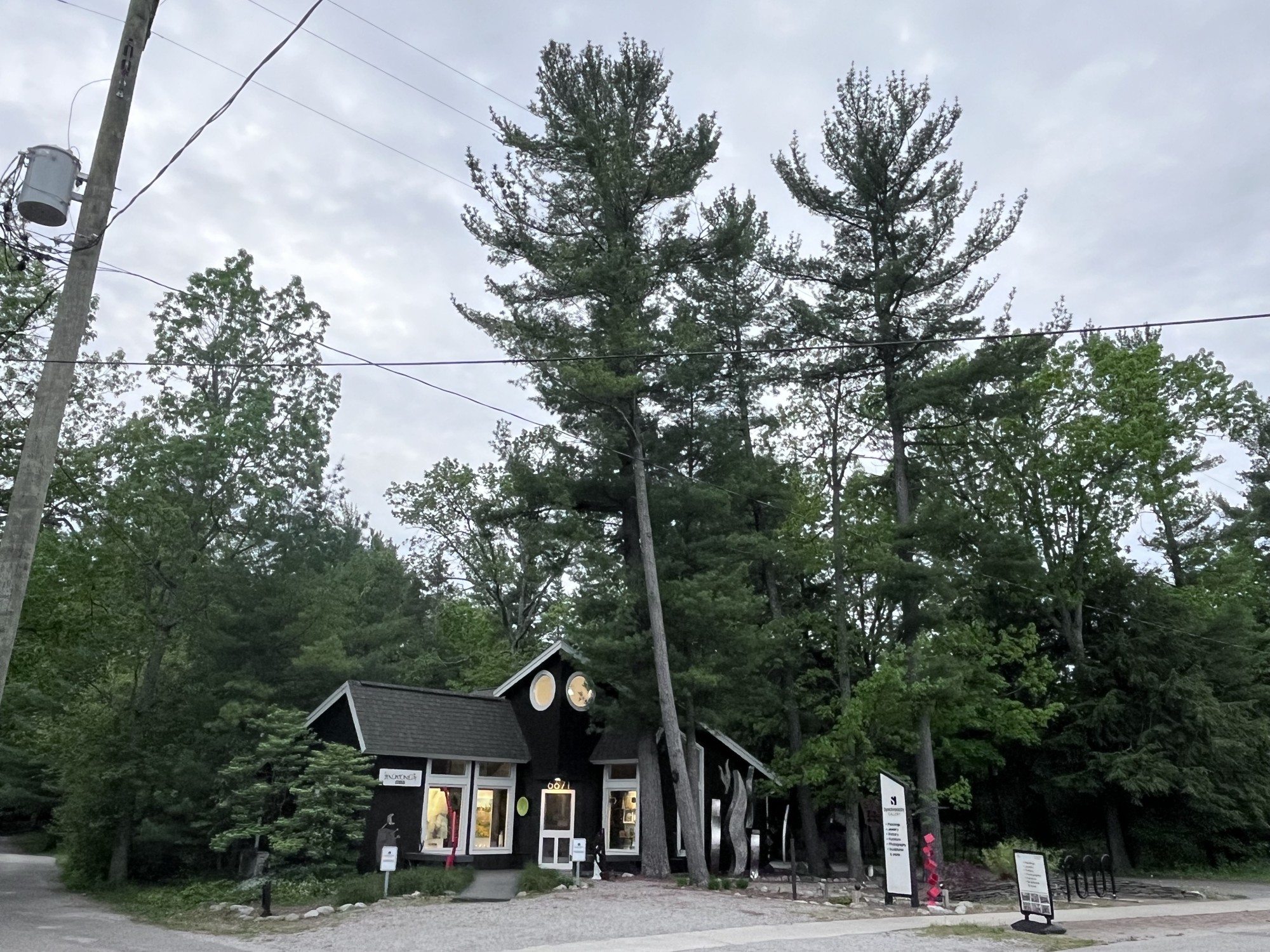
There was great beauty in the design: the raised sterling circle and the bezel-set rose-cut pink sapphire and blue/black spinels drew my eye, writes Bronwyn Jones. But it was the sound accompanying the movement of rounded sterling wires as they slid from their slender tubes and tapped gently against the inside of the raised circle that called out to me, a group of tiny chimes giving gentle voice in response to the movement of my hand and body. Such is the magical multi-sensory aesthetic of Dana C. Fear’s unique and stunning hand-crafted kinetic jewelry. It must be seen and touched within the context of her compelling studio and retail space on Kasson Road in downtown Cedar to fully comprehend its brilliance. That ring became mine; its fluid movement speaks as I write.

Manitou Island Transit, a 108-year-old family-owned company that ferries customers from Leland’s historic Fishtown to South and North Manitou Islands, is struggling to survive due to forces beyond its control. The Grosvenor-Munoz family, owners of Manitou Island Transit, filed a federal lawsuit against the National Park Service in early February accusing the agency of breach of contract and mismanagement during dock reconstruction projects on North and South Manitou Islands. The National Park Service has closed North Manitou Island to visitors in order to replace and relocate the docks due to sediment shoaling which has created access issues. North Manitou hasn’t had regular ferry service since 2022. South Manitou will be inaccessible in 2026 while a new dock is being built. Captain Jimmy Munoz, who helms the ferry, warns that the closure could be the end of an era. “If they shut us down—which they’re doing right now—there will never be a ferry boat back there again out of Leland.”

Tim Mulherin, author of “This Magnetic North: Candid Conversations on a Changing Northern Michigan” includes an excerpt of his book that features JoAnne Cook, chief appellate court judge for the Grand Traverse Band of Ottawa and Chippewa Indians and an outreach educator. Cook sometimes teaches an adult education course at Northwestern Michigan College, “The History of the Anishinaabek.” Her historical overview incorporates cultural and spiritual aspects of the band, and she covers the legal issues involving treaties (which are still ongoing) leading up to tribal life in modern time and the efforts to restore and advance Native traditions.

Scott Stone wants to update the old tradition of a community barn raising. He’s hoping to enlist friends, neighbors and any other interested parties in a community barn painting. This isn’t just about slapping some red and white on an old barn. It’s about restoring an iconic piece of the county’s landscape: the bicentennial barn just off West Harbor Highway outside Maple City. And it’s about honoring the way in which the barn was first repainted to celebrate the nation’s bicentennial. When Scott and Tamara Stone heard the property was for sale, they were intrigued. They read about it in a copy of the Glen Arbor Sun while they were vacationing at The Homestead.

Local musician Patrick Niemisto was just set to play at the Little Traverse Inn when the big storm of August 2, 2015, came howling through. He had set up inside as everyone knew big weather was coming. “Suddenly there was stuff flying in the air outside, and the power went out right away. M-22 was blocked just east of the Inn, and stranded folks came into the Inn and hung out,” he recalled. So Niemisto played acoustic music for “three or four” hours, then managed to pick his way home on back roads. The megastorm that pummeled Glen Arbor on that memorable Sunday afternoon 10 years ago packed straight-line wind speeds of more than 100 miles per hour—equivalent to a tornado or a type-2 hurricane. The winds toppled tens of thousands of trees, particularly on Alligator Hill and on the north side of Big Glen Lake, and knocked out power for a week during the height of the tourism season. No one died, desperate several near misses and dramatic stories. We devoted our entire Aug. 13, 2015, edition to coverage of the storm and Glen Arbor’s community resilience that followed, as neighbors helped neighbors. Much of the nation tuned into the coverage: “Glen Arbor” was briefly the top trending term on Facebook, and in the days after the Aug. 2 storm, our website, GlenArbor.com, attracted more than 100,000 views.