
An apple a day: Psenka family nourishes cidery dream
By F. Josephine Arrowood
Sun contributor
If “an apple a day keeps the doctor away,” just think what a whole orchard of the crisp autumn fruit can do for a person’s health. The adage certainly applied to Joseph Psenka, Jr., of Leland and Bloomfield Hills.
Joe Psenka was a mechanical engineer and entrepreneur, whose family vacationed in Leelanau County every summer. In 1987, he bought an 18-acre farm on M-22 south of Leland from Jill McFarlane, and moved his family to the property. Joe commuted downstate every week, designing for the automotive industry and Department of Defense, among others (including major components of the Humvees used in the First Gulf War, keeping sand out of gun turrets).
Each weekend was spent working on the main house: a large, graciously proportioned structure built from 1903 to 1906. His daughter Lisa Psenka recalls, “Dad was committed to this place, to keep its integrity. The first thing he did was strip decades of paint from the quarter-sawn ash trim, and pull the glued indoor-outdoor carpeting from the hardwood floors.”
Once the house was renovated, the Psenkas opened the Snowbird Inn bed and breakfast; Joe also continued his downstate engineering business. Several acres next to the inn had been planted in cherry trees. The family knew nothing of cherry farming, so the orchard was rented out to local farmers who pruned, sprayed, harvested, and sold the fruit each year.
In the late 1990s, in his early ’50s, Joe Psenka was diagnosed with “a very advanced” cancer, and turned to alternative natural health therapies, including nutrition. He discontinued chemical sprays on the cherries, whose productivity was waning around this time, and pulled the trees. He wanted to plant another kind of crop, but wasn’t sure what could be healthy and also sustainably grown.
With his recovery from cancer, apples piqued his interest. In addition to the cherries, the Snowbird Inn had a long-neglected, antique apple orchard tucked away on the back part of the property. Now overtaken by cedars and brush, it still feels magical—and the apples still produce some fruit, though not for commercial use.
“There’s a rich history of apple farming here,” says Lisa. “Apples are really amazing.” Research confirms that the fruit’s prebiotic fiber contains pectin, polyphenols, and antioxidants, which nourish health at many levels.
Ever the scientist, Joe also studied heirloom and other unusual varieties. He sought advice from a friend who owned a cider mill near St. Johns, Mich., and another mill owner near Detroit.
Then Joe talked to Nikki Rothwell of Michigan State University’s Horticultural Research Station about hard cider apples. Rockwell and her husband Dan Young, a beer brewer and food scientist from New England, had just begun their own process of creating Tandem Ciders near Suttons Bay,
Incredible as it seems now, there were only a few wineries on the Leelanau Peninsula in the early 2000s; local microbreweries, hops farms, distilleries, and cideries were still a few years in the future. But the seeds were being planted—literally. For over a century, Leelanau apple orchards have produced varieties that are eaten fresh, cooked into pies or sauce, and pressed into sweet cider we drink with doughnuts: MacIntosh, Gala, Golden Delicious, and Jonathan, for example. But many hard cider varieties are “spitters” in their raw state: bitter, sharp, or just plain yucky.
Rockwell and Young planted several hard cider apple varieties—practically unheard of in the region—primarily English and northern French varieties. Taking his cue from Tandem, whose model had been the small acreage orchards and artisanal cideries in rural England, Joe began to lay the groundwork for his own dream at Snowbird.
“My dad wanted to do it all himself,” Lisa says. “He was never in a hurry. He attended cider school and purchased a press than ran off the back of a tractor.”
He received zoning land use permission for the cidery from Leland Township, which specified that vineyards and cideries must be capable of growing the fruit they make into beverages. He also continued to work at his downstate engineering company, and hosted the B&B on summer weekends. Lisa, now grown, oversaw the inn’s day-to-day operations—as well as those of neighboring resort the Jolli-Lodge, owned by her husband’s family.
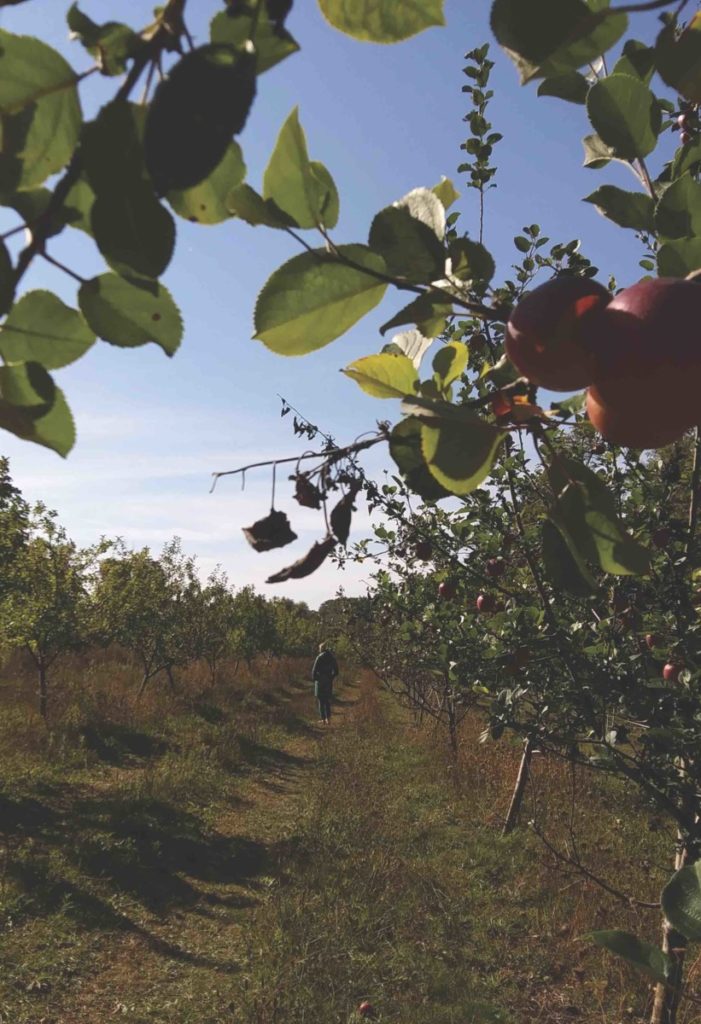
“I always worked very closely with my dad: running the B&B, going to the ag shows. Ten years ago on Mother’s Day, we planted 600 cider apple trees.” Their names carry the aroma of their exotic place histories: Dabinette, Galarina, Kingston Black, Yarlington Mill, Medaille d’Or.
“The cider community is really friendly,” says Lisa, adding that fellow busineses are generous with information and practical help. When Snowbird first began to harvest but lacked boxes, Tandem Ciders loaned some of theirs. The Psenka orchard sold its fruit each year to fellow cider makers and experimented with making its own.
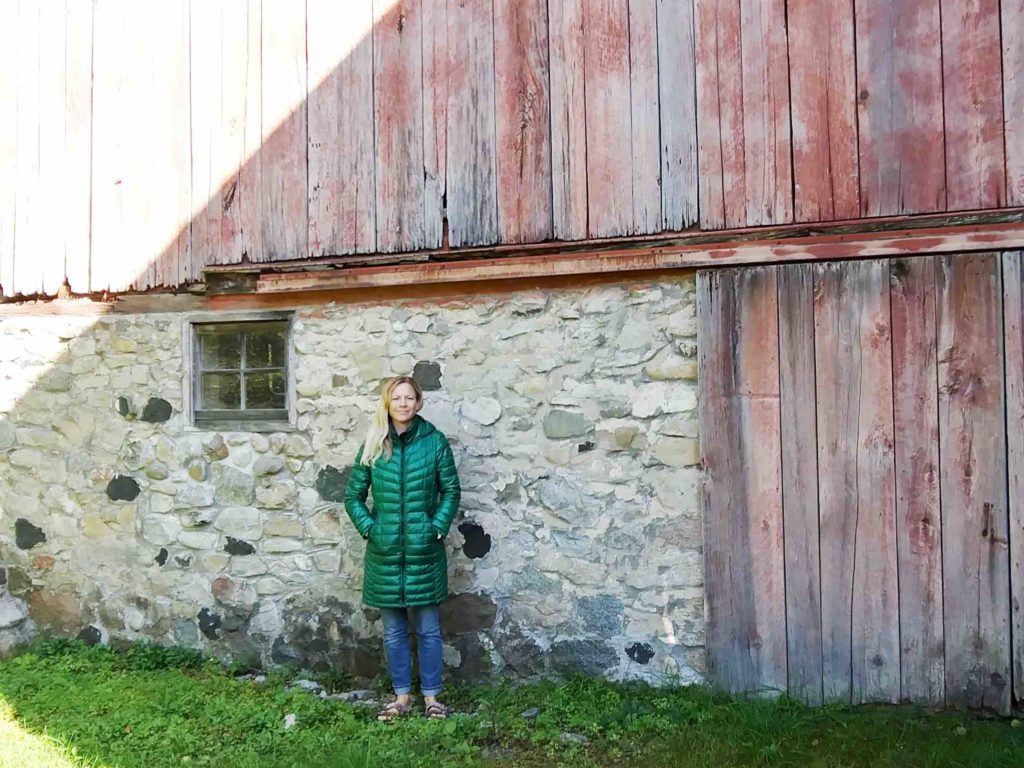
Joe began to envision future uses for some of the outbuildings, too: the tidy original farmhouse, which has no indoor plumbing other than a hand pump; the granary; the rustic sugar shack crafted of tree trunks and limbs. The big barn on Birdsong Rd once housed dairy cattle, while the attached “little barn” with its hand-hewn, bark-covered beams, dates from the 1880s and was moved to its present location by a prior owner. With help from a barn restoration expert, Psenka shored the foundations and braced the venerable structure.
Then in 2013, township zoning changed, prohibiting cideries in the Agricultural Rural district. The tasting room part of the project—which previously had been an allowed use—was put on hold as Joe worked over the next seven years to get approval from the township under the new ordinance, educated the community about the cidery, and reassured skittish neighbors that reasonable daytime hours would be adhered to and that “events” would not be taking place.
But on March 3, 2021, Joe Psenka died at his older son Jake’s home in Arizona—his dream of an apple orchard that could produce its own hard cider still unfulfilled. Lisa noted that, ironically, he died the same evening that his informational packet on the cidery was being presented via Zoom meeting by her older brother Jake to the planning commission.
In the months following Joe’s death, the Psenka family members continue the complicated work of seeing their father’s dream brought to fruition for the next generation: Joe Psenka’s 10 grandchildren.
“How do we keep this for them and about them, moving forward?” Lisa asks. The question evokes the same question that many people have who grew up in Leelanau, and want to be part of its next chapter—with jobs that sustain them and their families, while protecting the rural beauty of this place.
“We’ve all been stepping up to try to do what my dad was doing. He always had a lot in his head. He was always planning what might go where; if the little barn with its concrete floor and drain could be used for part of the cider-making,” for example.
Lisa attends planning and township board meetings, and continues to run the Snowbird Inn and Jolli-Lodge. Her mom lives at the inn and cooks breakfast for guests. Jake is a naturopathic doctor in Arizona, and continues to advocate for the cidery.
In true family tradition, Joe Psenka’s younger son, Charles (Chuck), carries on the entrepreneurial streak. Back in the early 2000s, he had experimented with beer brewing techniques with a friend in Dexter, Mich. The friend, Ron Jeffries, founded The Jolly Pumpkin Artisan Ales, while Chuck would go on to create the Leelanau Brewing Company, specializing in wheat beers and award-winning cherry meads with winemaker Shawn Walters for several years (see the Sun’s 2005 article A Whale’s Story).
Since Joe’s death, Chuck has taken on many of the active farm duties, including the recent apple harvest. There is talk of making an ice cider this year for family and friends—if the apples, typically left to harvest after the season’s first frost, aren’t stolen, as they have been for the past two years. He’s guarding the ice apples, and, along with Lisa and Jake, shepherding the planning and permitting process through the system.
This spring, after Joe’s death, 100 apple trees were delivered—a bittersweet (and sharp, and complex, as befitting hard cider apples) reminder of a father lost and a legacy that continues to give. With no instructions on where to place the seedlings, the Psenkas planted them in the lawn nearest the house. After all, with healthy, organic growing practices, they won’t ever have to worry about chemical sprays.
“My dad was really quiet,” Lisa says, “But he would have enjoyed that.”


