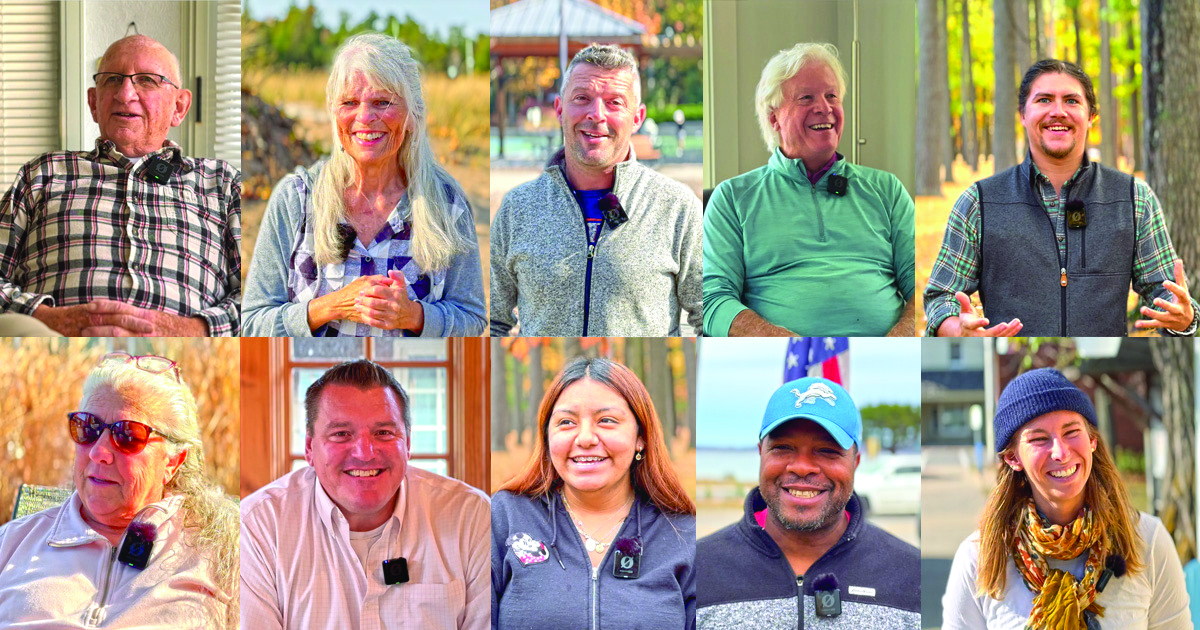
This time of year, Jim Sweeney’s food plot in Leelanau County doesn’t look like much. It’s a small field with some sparse grasses and a deer blind off to the side. But, come fall, it’s “like a lush lawn,” Sweeney said. Sweeney mostly plants clover, beets and turnips these days. And in places where the soil’s a little better than in northwest Michigan, people plant corn. Baiting—putting out piles of food such as corn to attract deer for hunting—has been illegal in the Lower Peninsula since 2018 to prevent the spread of chronic wasting disease, a fatal, contagious brain disease that’s been found in 14 Lower Peninsula counties and in Dickinson County in the Upper Peninsula. But some think pro-baiting lawmakers have a shiny new bargaining chip: The DNR needs money.
Jane Rapin, a community nutrition instructor with Michigan State University Extension, offered a food demonstration that featured fresh asparagus and quinoa salad earlier this spring at Leelanau Christian Neighbors’ food pantry in Lake Leelanau. May and early June are asparagus season in northwest Michigan, and LCN received a donation of locally grown stalks. “It was very well received. People were inspired by it,” said Rapin. “We did a short presentation about why this is nutritious and how cook with it. It’s important that we reach people who may not be familiar with asparagus.” Rapin’s work at the food pantry and other Leelanau locations including Northport high school and the Benodjenh tribal Head Start preschool in Peshawbestown is funded by the Nutrition Education and Obesity Prevention Grant Program, or commonly known as SNAP-Ed. The national nutrition education program is slated for elimination under the budget bill passed on May 22 by a single vote by the Republican-controlled House of Representatives. The Senate will pass its own bill in the coming weeks.
Share this:
- Share on Facebook (Opens in new window) Facebook
- Share on X (Opens in new window) X
- Email a link to a friend (Opens in new window) Email
- Share on Reddit (Opens in new window) Reddit
- Share on Pinterest (Opens in new window) Pinterest
- Share on LinkedIn (Opens in new window) LinkedIn
- Print (Opens in new window) Print
- Share on Tumblr (Opens in new window) Tumblr
With a new tourism season upon northern Michigan, uncertainty remains about how national parks will handle millions of visitors amid lingering staffing questions because of back-and-forth federal workforce policies. Sleeping Bear Dunes National Lakeshore has approximately two-thirds of the seasonal staff it typically needs to welcome more than 1.5 million visitors over the next three busy months. “They’re still trying to get anybody else to accept a job, but it looks like there won’t be many more coming,” said former Sleeping Bear deputy superintendent Tom Ulrich. He added that the true impacts aren’t being felt yet because the park isn’t yet getting 400,000 visitors per month as they do in peak-season.
Share this:
- Share on Facebook (Opens in new window) Facebook
- Share on X (Opens in new window) X
- Email a link to a friend (Opens in new window) Email
- Share on Reddit (Opens in new window) Reddit
- Share on Pinterest (Opens in new window) Pinterest
- Share on LinkedIn (Opens in new window) LinkedIn
- Print (Opens in new window) Print
- Share on Tumblr (Opens in new window) Tumblr
It feels inviting to approach a beech maple forest on an early spring day when the snow is just thinning. Each beech tree has a ring of open forest floor around it, as the trees radiate the sun’s heat—islands of open earth in a snowy landscape. The forest floor is newly exposed and gives off the faintest scent of life returning, writes Jess Piskor in this second in a two-part series about Northern Michigan beech trees and the now extinct passenger pigeon. Part of the forest is actively dying now, full of disease. There are the obvious fallen giants. The dead beeches rest in shattered grey tangled masses, like a pile of dead elephants. A few healthy-looking crowns have snapped off, 30 feet up—trunks weakened with disease. The branches show swollen pointed buds, as if the tree would leaf out one last time. It won’t. Many still stand, but are holed by woodpeckers. Shelf fungus grows up the sides, dropped limbs catch the foot. Here and there a few giants still look, dare I say, okay? At least one more year then, old friends. Let me gather your nuts.
Share this:
- Share on Facebook (Opens in new window) Facebook
- Share on X (Opens in new window) X
- Email a link to a friend (Opens in new window) Email
- Share on Reddit (Opens in new window) Reddit
- Share on Pinterest (Opens in new window) Pinterest
- Share on LinkedIn (Opens in new window) LinkedIn
- Print (Opens in new window) Print
- Share on Tumblr (Opens in new window) Tumblr
“I’m terrified to cross the border.” “We’re disgusted.” “The annexation threats and tariffs are a ‘screw you’ to Canada.” “We have canceled our 2025 vacations in the USA. I no longer feel welcome there.” “I won’t go until Trump is gone. What he’s doing is horrific.” Those are the voices of Canadians who live in Sault Ste Marie, Ontario—just across the international border from Michigan’s Upper Peninsula, and longtime friendly neighbors in trade, in culture, in shopping, and in hockey. Apparently, no longer. Or, at least, not until Trump leaves office.
Share this:
- Share on Facebook (Opens in new window) Facebook
- Share on X (Opens in new window) X
- Email a link to a friend (Opens in new window) Email
- Share on Reddit (Opens in new window) Reddit
- Share on Pinterest (Opens in new window) Pinterest
- Share on LinkedIn (Opens in new window) LinkedIn
- Print (Opens in new window) Print
- Share on Tumblr (Opens in new window) Tumblr
With dangerously low child vaccination rates against measles in this region, federal government funding cuts couldn’t come at a worse time for the Benzie-Leelanau District Health Department. The BLDHD learned on April 1 that it would face a funding shortfall of more than $230,000 in the coming fiscal year—much of it related to school health services the department provides to local schools. In Leelanau County, 82 percent of children between ages 6-18 years have received the MMR vaccine, which offers 97 protection against measles, mumps and rubella after the second dose. In Benzie County, the number is 83 percent. “That rate is relatively low. Ideally, we should be at 95 percent,” said BLDHD health officer Dan Thorell. “Very few vaccines are as effective as the measles vaccine.”
Share this:
- Share on Facebook (Opens in new window) Facebook
- Share on X (Opens in new window) X
- Email a link to a friend (Opens in new window) Email
- Share on Reddit (Opens in new window) Reddit
- Share on Pinterest (Opens in new window) Pinterest
- Share on LinkedIn (Opens in new window) LinkedIn
- Print (Opens in new window) Print
- Share on Tumblr (Opens in new window) Tumblr
Last spring, a farmer in Centerville Township started applying a kind of fertilizer to his fields: Sewage pumped from septic tanks, often called “septage.” That kicked off a local fight about whether it’s legal to apply that septage waste and sparked concerns about contaminating the land and water. Neighbors and officials concerned about the use of septage to fertilize fields pointed to the township’s zoning ordinance which requires a special permit for septage application on land. But Centerville Township attorney Chris Bzdok said at a township board meeting in mid-March that their hands are tied when it comes to stopping the use of septic tank waste on a local farm. The site falls under the purview of the state Department of Environment, Great Lakes and Energy, which had granted a permit to use septage at that site. This story was originally reported by Interlochen Public Radio in mid-March.
Share this:
- Share on Facebook (Opens in new window) Facebook
- Share on X (Opens in new window) X
- Email a link to a friend (Opens in new window) Email
- Share on Reddit (Opens in new window) Reddit
- Share on Pinterest (Opens in new window) Pinterest
- Share on LinkedIn (Opens in new window) LinkedIn
- Print (Opens in new window) Print
- Share on Tumblr (Opens in new window) Tumblr
UPDATE (March 12): The National Park Service once again has the green light to hire seasonal workers, but the late start has hampered the ability of Sleeping Bear Dunes to populate its seasonal roster. As of Glen Arbor Sun press time, approximately 80 percent of the National Lakeshore’s more than 100 seasonal positions remained vacant. The federal government chaos and the inability of seasonals from outside the area to find housing has prompted a slew of declines from candidates who were suddenly called and offered seasonal positions in March. Sleeping Bear Dunes staff have been paralyzed in other ways, too. Government-issued credit cards used by Park staff are frozen. They can’t buy ammunition or ranger supplies; they can’t even buy toilet paper for outhouses at hiking trails.
Share this:
- Share on Facebook (Opens in new window) Facebook
- Share on X (Opens in new window) X
- Email a link to a friend (Opens in new window) Email
- Share on Reddit (Opens in new window) Reddit
- Share on Pinterest (Opens in new window) Pinterest
- Share on LinkedIn (Opens in new window) LinkedIn
- Print (Opens in new window) Print
- Share on Tumblr (Opens in new window) Tumblr
Leelanau County Sheriff Mike Borkovich will face tough questions from commissioners, and comments from citizens, at the Board of Commissioners meeting on Feb. 11 — following his recent statements that, if asked, he would cooperate with federal agents arresting and deporting undocumented immigrants. However, Borkovich considered immigration raids at Leelanau County schools “unlikely”. During a Jan. 10 meeting with the superintendents of the county’s four public schools, he said he didn’t think it would be “necessary” for federal agents to visit local schools. Days after Trump’s inauguration, a handful of Leelanau farmers met with Borkovich in an effort to convey to the sheriff the importance of immigrant and migrant farmworkers to the region’s agricultural economy. The Hispanic community is crucial to Leelanau’s agricultural workforce. Out of 22,000 county residents — according to the latest Census — as many as 1,000 identify as Hispanic or Latino. Many have an undocumented parent or family member living here in northern Michigan, now as rooted here as the pine trees, though they may have crossed illegally into the United States years ago.
Share this:
- Share on Facebook (Opens in new window) Facebook
- Share on X (Opens in new window) X
- Email a link to a friend (Opens in new window) Email
- Share on Reddit (Opens in new window) Reddit
- Share on Pinterest (Opens in new window) Pinterest
- Share on LinkedIn (Opens in new window) LinkedIn
- Print (Opens in new window) Print
- Share on Tumblr (Opens in new window) Tumblr
Twice in 2019 Dollar General tried to build stores in Leelanau County. Twice the discount chain goliath was defeated by local zoning and citizen opposition. Leelanau remains the only county in Michigan without a discount chain store. Midwest V, the same company that targeted Maple City and Empire six years ago, now wants to build a dollar store at the corner of Maple City Road and Cemetery Road in Cleveland Township — 0.6 miles north of downtown Maple City. The Cleveland Township Planning Commission will hold a public hearing about the proposed development on Wednesday, Feb. 5, at 7 pm at the Township Hall.
Share this:
- Share on Facebook (Opens in new window) Facebook
- Share on X (Opens in new window) X
- Email a link to a friend (Opens in new window) Email
- Share on Reddit (Opens in new window) Reddit
- Share on Pinterest (Opens in new window) Pinterest
- Share on LinkedIn (Opens in new window) LinkedIn
- Print (Opens in new window) Print
- Share on Tumblr (Opens in new window) Tumblr