When dolphins wash up on shore in significant numbers, we suspect there’s something wrong happening in the ocean. It’s just not what we expect. It’s not a natural phenomenon. We may not know what it is exactly, but we guess that, whatever’s happening, however unknown or unknowable to us, it’s got to be about more than dolphins simply taking a notion. Why don’t we have the same common sense intuition about the children at the U.S.-Mexican border?
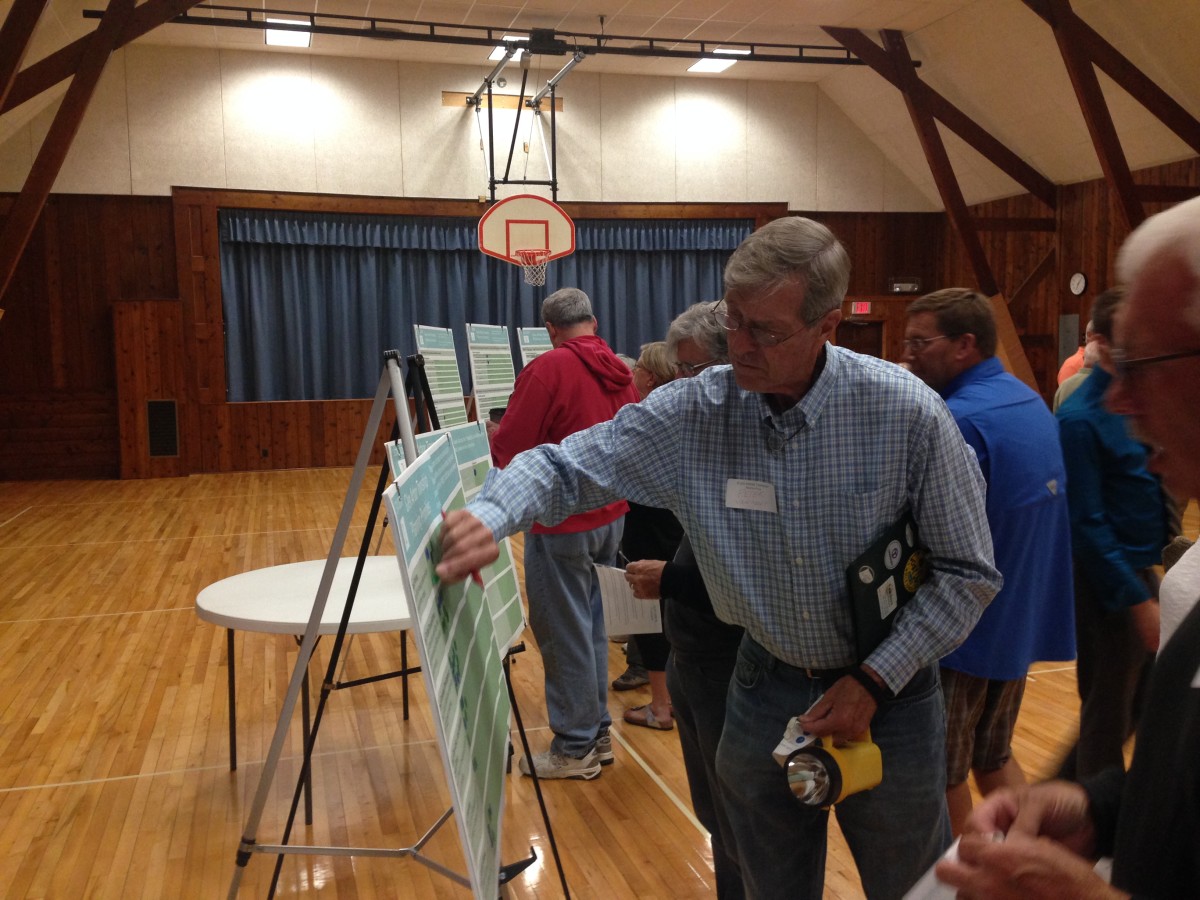
The Glen Arbor Township Board is working on a new Master Plan for Glen Arbor. Faced with burgeoning summer tourist crowds, national media attention, and a popular new bike trail, the time seems right for Glen Arbor to reexamine its identity, in what direction the town is going, and what changes are needed to keep the community safe, sustainable, beautiful and profitable.

Do you want to learn how your favorite beach may respond to predicted climate change? Then join researcher, Lukas Bell-Dereske for a special public program entitled “Climate Change in the Great Lakes Dunes: Responses of the Plant Community at Sleeping Bear Dunes National Lakeshore” on Thursday, August 21 at 9 a.m. at the Philip A. Hart Visitor Center auditorium in Empire.

Leelanau County has long been known as “the land of delight,” but for many of its people, the terrain leading to a place called home appears more difficult. For at least the past 25 years, homes and land have been bought and sold dearly, but a confluence of circumstances has brought the issue of affordable housing to a crisis state today. These include the start of the Great Recession in 2008, a severe tightening of lending practices, a lack of permanent, full-time jobs in a growing tourism and service region, and the refusal of government and some community leaders to recognize and act on long-term solutions to the county’s housing challenges.

The Sleeping Bear Dunes National Lakeshore proposes to develop a hiking and paddling trail that follows the Lake Michigan shoreline in the park from Platte Bay to Good Harbor Bay. To do so, the National Lakeshore will prepare an Environmental Assessment (EA), which will describe and analyze alternatives for this trail.

Affordable housing in Leelanau County is in short supply. That isn’t actually burning news. It wasn’t even news in 1995, when I became an Americorps worker whose mission was to help start a five-county housing nonprofit organization called HomeStretch. What makes it relevant, even urgent, today is that housing in the county—for workers with college degrees, skills and good jobs, families, people with low incomes, seniors, young adults—is evaporating more quickly than the water levels on Lake Michigan. When the basic needs of a community aren’t met—whether through a confluence of circumstances, lack of initiative, an adverse business climate, or refusal by its members to take action—then the whole community suffers.

Here’s a quick timeline of events surrounding Sugar Loaf since the resort reemerged in the headlines last September. Below that you’ll also find a list of major questions that remain about Sugar Loaf and its ownership.

Andy Gale of Cedar is one such seeker who has made “waste not, want not” his personal and professional mission. The founder of Bay Area Recycling for Charities (BARC) discusses his visionary goals and the extraordinary growth of his six-year-old venture. BARC collects a wide variety of recyclable materials from both residential and commercial customers, offering both convenience and a cost-effective way to make their detritus “disappear.”

This spring in Empire, a heated debate has ignited over whether visitors from outside the Township ought to begin paying $1 per hour to park their automobile at one of 87 spots at the popular Lake Michigan public beach. The payment would be made at one, centrally located machine that accepts credit cards. Nearly empty during the cold months, the beach fills up fast in July and August.

Mark Evans, who had hoped to build a forest canopy walk this summer in Leelanau’s Kasson Township, confirmed to the Glen Arbor Sun that the prominence of Ash trees on the property (many infected with Emerald Ash Borer), and not the outcry from citizens opposed to the project, was what stopped him from moving forward.